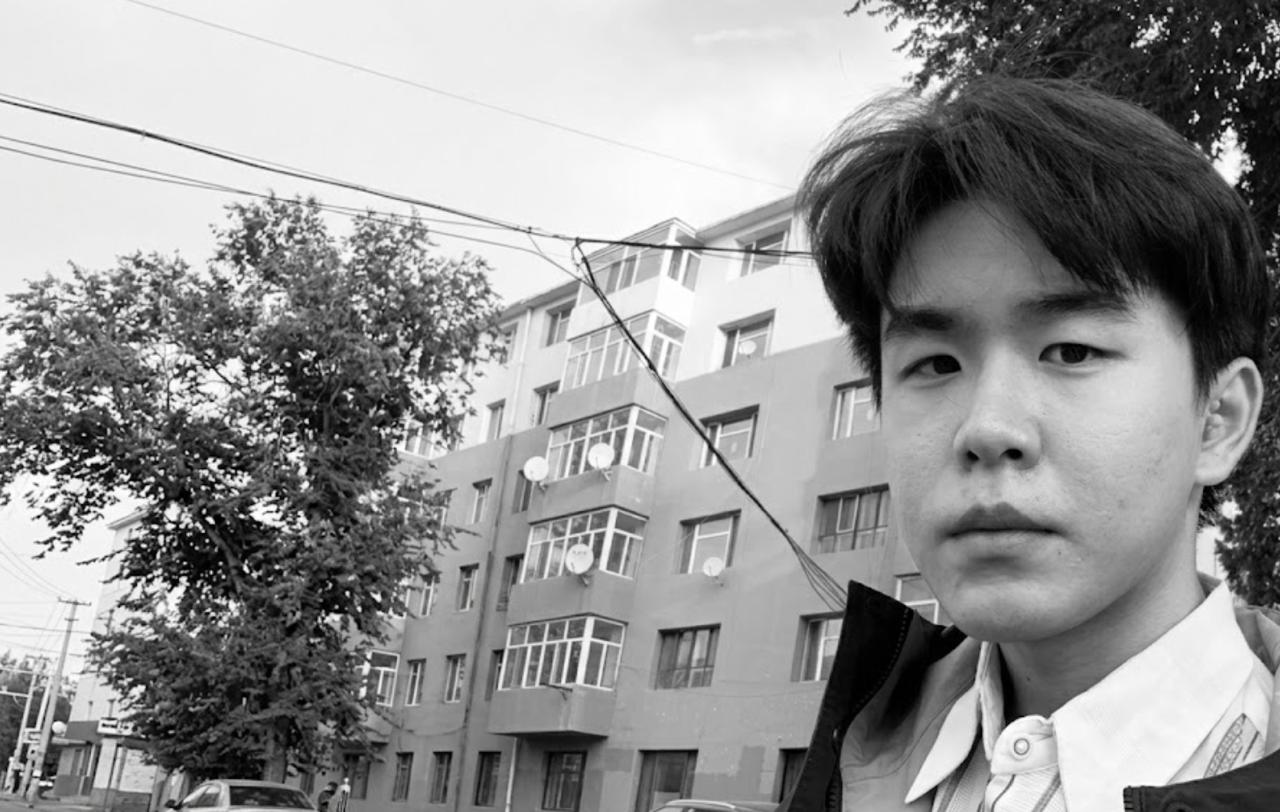
His debut documentary follows John — an elderly man who claims encounters with aliens. But Hanzi Zhu was never interested in whether John's experiences were real. What drew him was something quieter: the gap between an extraordinary inner world and an ordinary life, and what that gap reveals about loneliness, belief, and the human need for meaning.
Could you introduce yourself and tell us a bit about your film?
My name is Hanzi Zhu. I'm a filmmaker based in China, and this is the first documentary film I've directed. The film follows an elderly man named John, who claims to have had encounters with aliens. What interested me was never whether those experiences were true or false. I was drawn to the contrast between the extraordinary world he describes and the ordinary reality he lives in. Over time, the film became less about aliens and more about loneliness, survival, and the human need for meaning.
Were there any filmmakers who influenced your approach?
Yes. A Chinese documentary filmmaker named Wang Bing has been a major influence on me. What I learned from him is not a visual style, but a way of looking at reality. His films taught me that cinema doesn't need to explain people too quickly or judge them immediately. Sometimes you simply stay with someone long enough, and deeper truths begin to reveal themselves.
How did the project evolve during filming?
Documentary filmmaking is different from fiction because there isn't really a fixed script. At first, I was focused entirely on John and his experiences. But as filming continued, I became increasingly interested in the world around him — his family, visitors, online followers, and the different ways people reacted to his beliefs. The film gradually expanded from one individual into a study of relationships and human connections.
The challenge was finding a balance between empathy and critical distance: neither judging him too quickly nor disappearing entirely into his world.
What was the most challenging part of making the film?
I never wanted John to become a spectacle or simply a case study. I wanted him to remain a complete human being — someone who could be confident, vulnerable, lonely, sensitive, and difficult at the same time. The challenge was finding a balance between empathy and critical distance: neither judging him too quickly nor disappearing entirely into his world.
Did making the film teach you something about yourself?
Absolutely. While filming John, I realized I was also confronting parts of myself. He has spent years searching for understanding and recognition, hoping that others would take his experiences seriously. As a filmmaker, I'm also trying to understand the world and make sense of my own experiences through cinema. The film reminded me that the relationship between a filmmaker and their subject is never completely separate.
What do you hope audiences will take away from the film?
I hope viewers enter a space of observation and reflection. The film is about belief, loneliness, dignity, and the ways people create meaning in their lives. But it's also about how belief is never purely personal — it affects families, communities, online spaces, and relationships. I hope audiences move beyond curiosity and see something more human and emotionally complex.
Is there a scene you're particularly proud of?
There are two. One takes place late at night after John has argued with his wife. He sits alone in the dark, looking at his phone, before quietly returning to his workshop to continue his experiments. It moved me because someone who speaks constantly about cosmic civilizations still has to face very ordinary emotional realities. The second scene is much lighter. John is passionately describing life on another planet when his wife interrupts him and tells him to go outside and eat some corn. He does exactly that, then comes back and continues talking about the universe. I love that moment because it captures how grand beliefs and everyday life exist side by side.
The longer you spend with people, the more you realize that nobody can be reduced to a single label. Cinema allows all those contradictions to exist together.
What do you enjoy most about filmmaking?
Filmmaking constantly brings me into other people's worlds. It allows me to spend time inside lives that would otherwise have nothing to do with my own. The longer you spend with people, the more you realize that nobody can be reduced to a single label. Cinema allows all those contradictions to exist together. For me, filmmaking is not just storytelling — it's a way of understanding the world and getting closer to people.
Looking back, is there anything you would do differently?
Not really. This project was always intended to be long-term. The first film is only the beginning. Future films will expand outward, focusing not only on John but also on the people around him — his supporters, critics, and the communities shaped by his beliefs. What interests me now is how ideas spread through families, social networks, and society itself.
Finally, is there a message you'd like to leave for our readers?
I simply hope people will have the opportunity to experience the film for themselves. If audiences around the world can connect with it and engage with its questions, I would feel incredibly grateful.
Watch the interview
Open on YouTube ↗