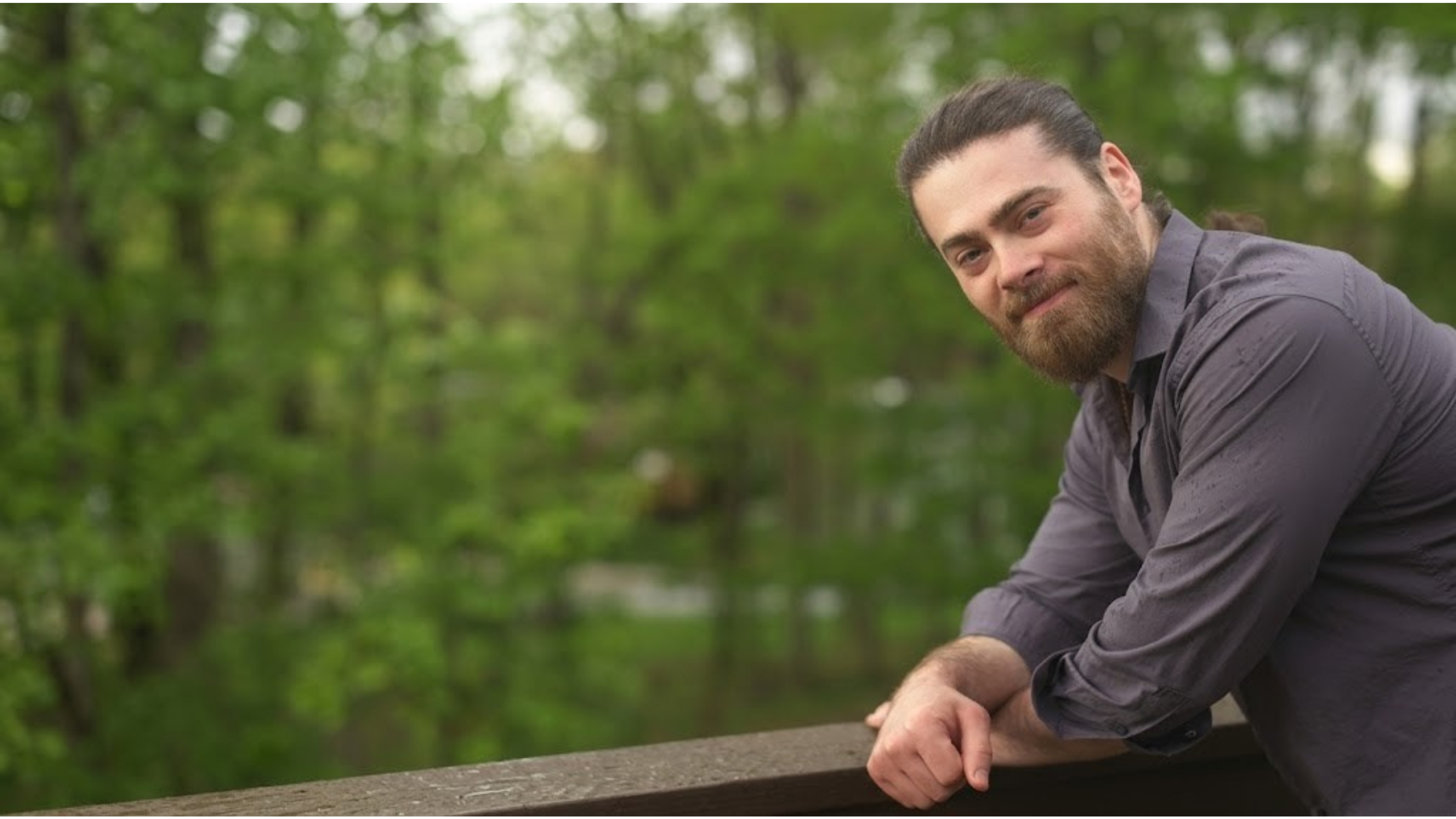
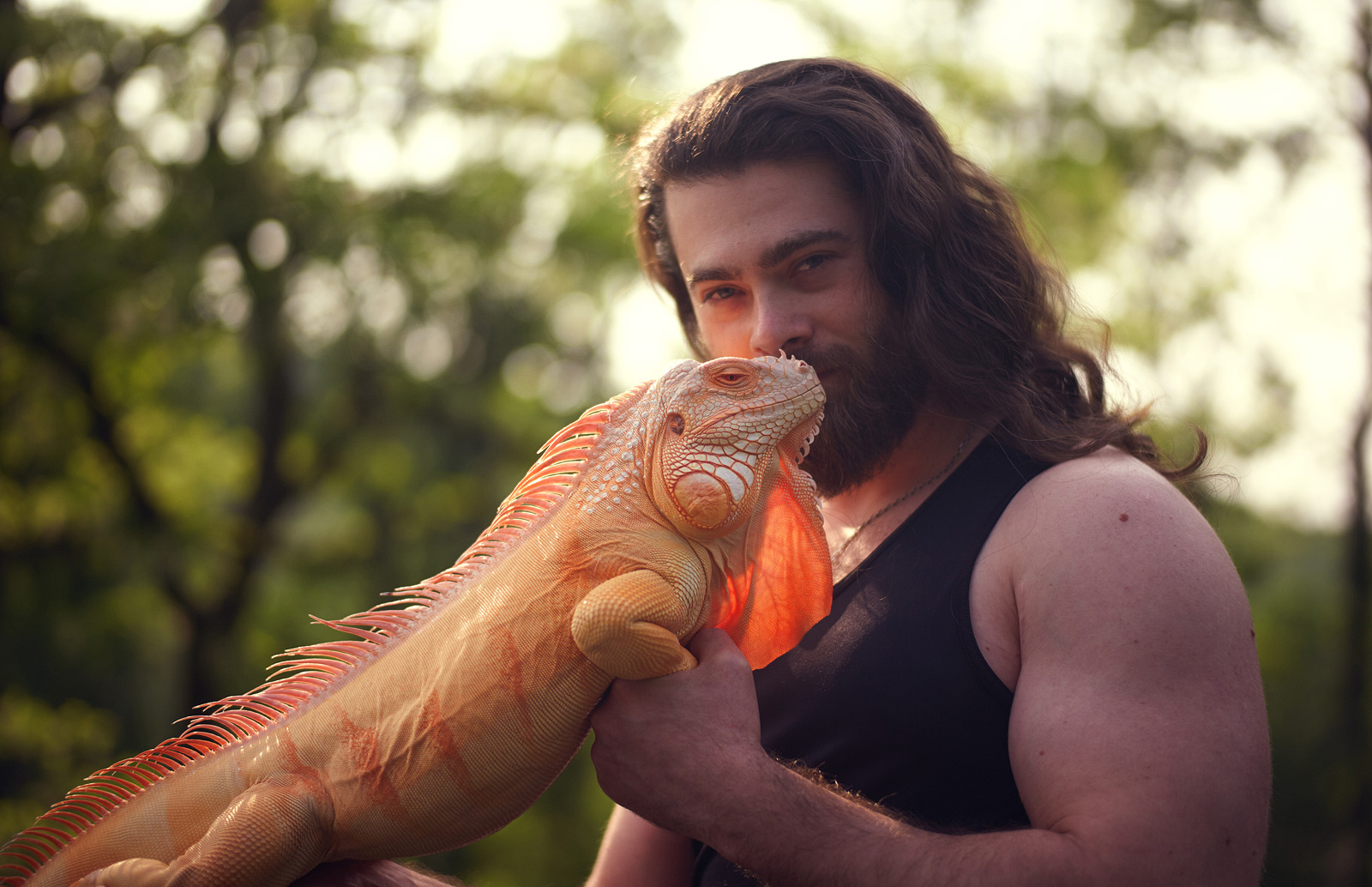
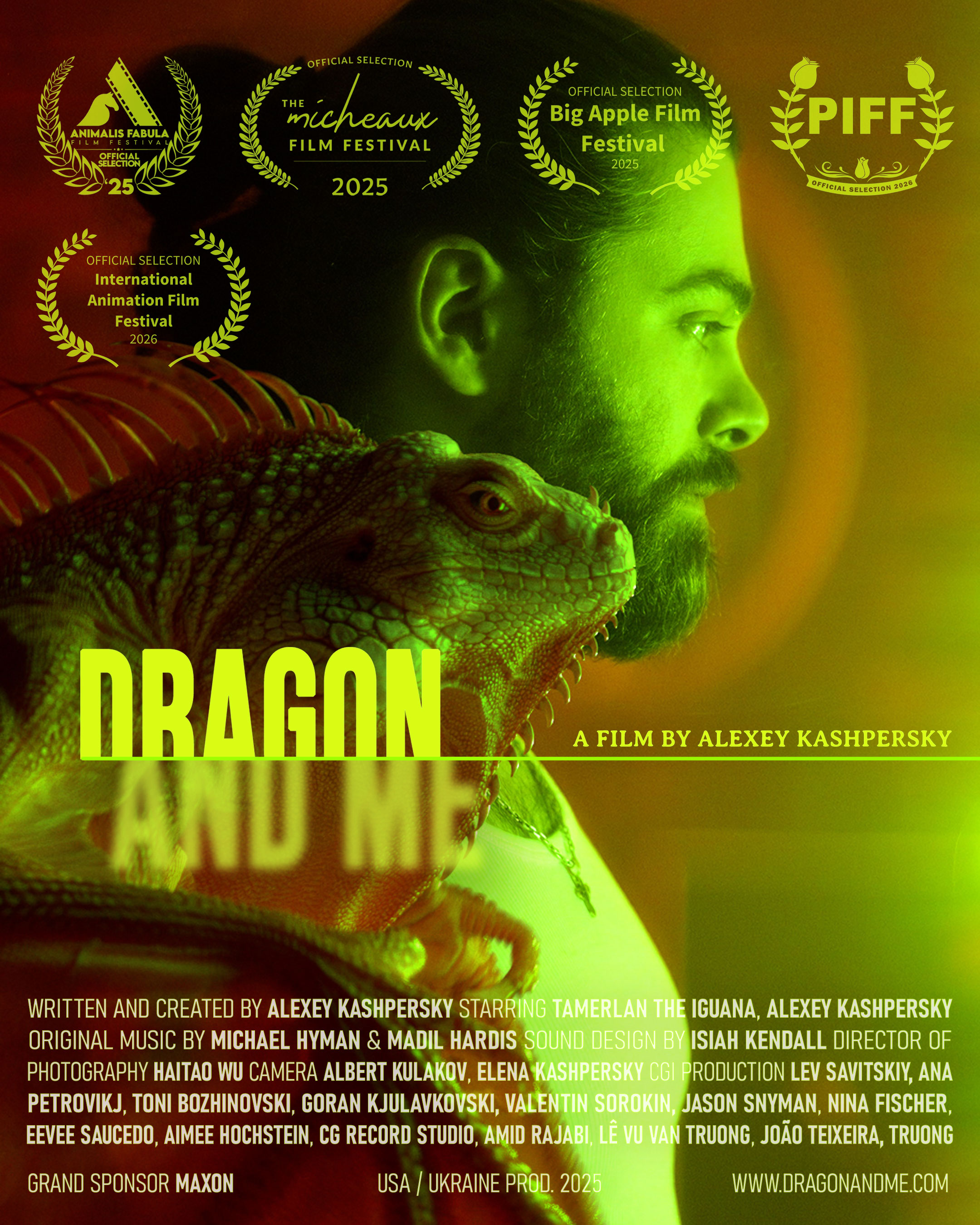
Alexey Kashpersky is a Ukrainian-American filmmaker, medical animator and visual artist from Poltava. His short film began with an albino iguana named Tamerlane — blind from birth, orange in colour, and the unlikely catalyst for one of the most personal and visually inventive films we have encountered this year.
Tell us about yourself and your film.
My name is Alexey Kashpersky, I'm from Poltava. By training I'm an artist — I hold a master's degree in fine arts. In the 2010s I moved into computer graphics, and after winning an international competition I was invited to work abroad and chose the United States. There I worked as a medical animator, and later founded my own studio. The film is a personal project. I had long wanted to try my hand at cinema, and the idea came from my albino iguana, Tamerlane. He is unique — orange, blind from birth — and we share a very special bond. That's where everything began.
How did you approach making a film without a large budget?
I understood I had to work with what I had. I had an idea for a feature film, but no resources. So I made a short prologue — an introduction to a larger story. It's a world where wishes can come true, and the characters enter it — and that's where the film ends.
"Shoot the film you can make — not the one you only dream about."
The film has a very distinctive visual style. How did you achieve it?
I was inspired by cinema of the 80s and 90s and wanted to recreate that "film grain" feeling on a modern camera. I used a specific lens that gives a unique depth of field. The portal was a separate challenge — the film has 26 such scenes, and doing them entirely in CGI would have been too expensive. So I found a solution: a laser measuring device and a smoke machine created a visible plane in space, which was then refined in post-production.
Did you work with a team or mostly alone?
Almost the entire film was made by me. I was director, actor, and partly cinematographer. But there was help — about 26 people in total. For example, the cinematographer was a two-time Emmy Award winner who agreed to work for almost nothing. I also had the help of an animator who had worked on Game of Thrones — that was an invaluable experience.
What was the most difficult part of the process?
The constant lack of resources. There were moments when production had to stop entirely for lack of money. At one point I even gave up my health insurance to buy a hard drive and continue working. It was also difficult to master new skills — animation, drone work, complex technical processes.
What is the central idea of the film, and what did the project give you personally?
I think the message is: be careful with your wishes. The idea is inspired by the Strugatsky brothers — wishes come true not as we imagine them, but as we truly are inside. This project preceded many changes in my life. It was a difficult but important period: a lot of self-reflection, changes, even personal losses. But also enormous growth. At some point I understood something important: shoot the film you can make — not the one you only dream about.
What do you hope audiences take from the film?
I hope people don't lose their faith in wonder — even when it seems naive. And that they listen a little more carefully to themselves, and to their true desires.
Watch the interview
Open on YouTube ↗