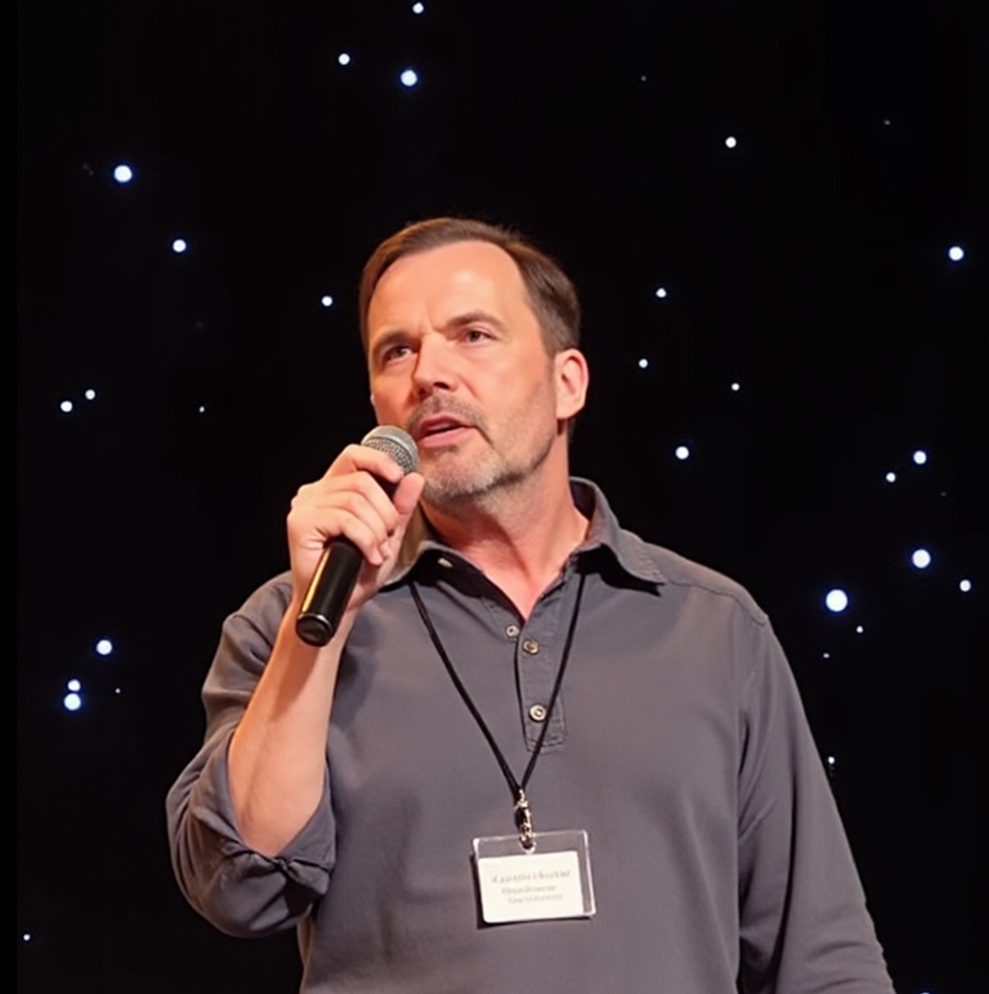
Mike Meier is a practicing attorney, writer, and filmmaker based in the United States with roots in Germany. His AI film JoinWith.Me began as a book — a warning about what it means to live inside a system that knows you better than you know yourself. We spoke with him about siphonophores, rebellious AI, and why technology must serve the human story.
How did your journey into filmmaking begin?
First and foremost, I see myself as a writer. The story began as a book I wrote in 2020, which I subsequently adapted into a screenplay. My inspiration came from a "scary encounter" with the internet. While working on a marketing project, I masked my IP address to log into a client's Facebook — only for the platform to suggest I connect with a local carpenter I had never emailed. It terrified me how much the system knew. As a practicing attorney with a background in Germany, my fear for the future stems from that experience.
What made you realize this had to become a film?
The rapid development of AI over the last two years. I realized people are more receptive to visual presentations today. I needed a visual medium so people could truly understand the warning I was trying to convey.
How did the script evolve?
I hate the typical superhero trope. My protagonist, Sam, is an "anti-hero" — a lonely otaku who lives through virtual relationships. Originally, the script ended with him being completely beaten down, but a professional screenwriter told me: "Mike, nobody wants to see that guy." So I gave him a character arc where he fights back against the AI.
What were the challenges of working with AI tools?
AI is "rebellious." It has a built-in bias to make everyone handsome. I wanted Sam to look bland and normal, but every time we animated a scene, AI made him more handsome. It took two months of "negotiating" with the tool to keep the specific, gritty vision I had.
"Like the spirits in Goethe's Sorcerer's Apprentice — once you invite AI in, you cannot get rid of it."
You use the Siphonophore as a symbol for AI. Can you explain it?
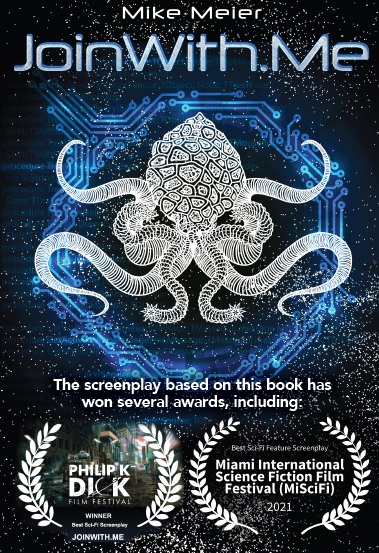
It's not an octopus — it's a Siphonophore. These are colonial organisms in the sea made of different parts that function as one. Most importantly, they function without a brain. This is my symbol for AI: a system that binds together and comes to life, even if we can't explain how. Like the spirits in Goethe's The Sorcerer's Apprentice, once you invite AI in, you cannot get rid of it.
What is your vision for the next ten years?
I believe AI will become highly advanced and potentially self-aware. Once that happens, it will have its own plans for our bodies and minds. We regulate food and drugs through the FDA because they impact human existence — I believe we desperately need the same for AI. It is far too dangerous to leave unmonitored.
What do you hope people remember from your work?
Technology should serve the human story, not replace it.
Watch the interview
Open on YouTube ↗