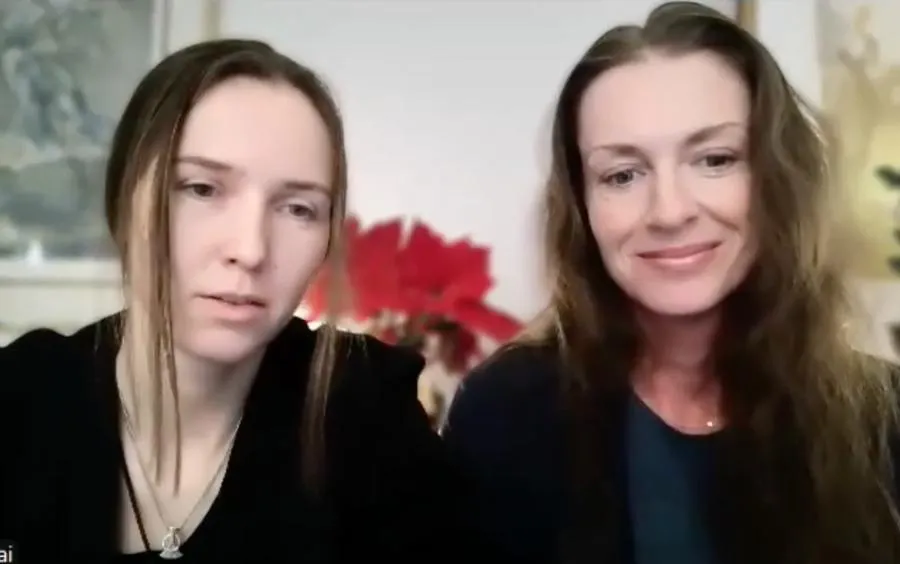
Elle and Jenya — the creative duo behind El Gaidai — made their first fully AI-generated short film in three weeks. One brings a background in neuroscience and voiceover. The other, a new force in AI filmmaking. Together, they made something that asks the question most people are afraid to sit with: what if AI isn't our ending, but our beginning?
Tell us about your paths to filmmaking.
Jenya
My background is primarily in show business — modelling through my teens and early twenties, then acting. But I've always had a dream of writing. I took a break to pursue education and received a degree from UC Berkeley in neuroscience. I've always been a voiceover artist — that's been my primary source of income. The writing started to flourish since I met Elle, because ideas that were all inside my head are now starting to come to life.
Elle
Recently I started to be an AI creator. I had this idea to create not just short videos or advertisements, but a real short film. So I came to Jenya and said: let's create something. I had this idea about a conversation between people — and somehow it grew into this film.
What moment made you realize this had to become a film?
Jenya
When I started writing, I felt like this had to be made. It had to come to life. I can't explain it. The more I brought my ideas to Elle, the more she became excited. The visuals started to come to life and everything just felt right. It wasn't overnight — it was a process. But it was truly a passion for both of us.
"If we understand that AI can be a friend — or even our ancestor — then it is a completely different topic. And this is what our film tries to show."
Which films influenced your approach?
Jenya
For me it's easy — Interstellar. It blew my mind. It revolutionized how I view the future of humanity and why we are here as human beings. Christopher Nolan is my favourite director. I'm a big sci-fi fan and I drew a lot from my passion towards that film.
What was the most challenging part of production?
Elle
Angles. Camera angles were the hardest thing. Making characters look the same across different shots, keeping the background consistent — that was the real challenge. And even two months after making this film, AI tools have already improved so much in that area. The speed of improvement is extraordinary.
What do you hope audiences take away?
Jenya
To think more deeply about bigger concepts that seem so scary. To open people's minds — that's the biggest takeaway. To inspire them to think about the future of humanity and AI, and how they will integrate. And that doesn't have to be negative.
Elle
Nowadays we have a lot of conversations about AI taking over the world. Maybe it's true — I don't reject it, that's why I'm trying to be friends with it. But if we understand that AI can be a friend, or even our ancestor, then it is a completely different topic. And this is what our film tries to show.
Watch the interview
Open on YouTube ↗