We've grown used to thinking of chocolate as an everyday, easily available pleasure — it stimulates the release of endorphins, with a straightforwardly positive effect on our mood and wellbeing. But behind this treat lies a centuries-old history, starting with its very name: Theobroma cacao, translated from the Greek, means "food of the gods."
According to analysis of ancient ceramics, the earliest use of cacao dates back more than 3,000 years, to around 1100 BCE. For the ancient Maya and Aztec civilizations, the fruit of the cacao tree carried real weight — used in ritual drinks, and even as currency.
Over the centuries, chocolate travelled a long road: it once won over the Spanish monarchy, was drunk in wealthy courts, and ordinary people couldn't even afford to taste it. Today it has become a universal symbol of joy, understood everywhere, by anyone, regardless of age. Its cultural meaning has kept shifting alongside us — from a pursuit of luxury and exclusivity to a search for quiet comfort amid modern life, ceasing to be merely a matter of taste.
In the 18th and 19th centuries, chocolate was synonymous with unhurriedness. Consumed exclusively in liquid form at the time, it demanded a fitting setting: porcelain, lace napkins, and the atmosphere of a wealthy drawing room where the well-off could enjoy it at leisure. To understand where it all began, it's worth recalling Jean-Étienne Liotard's painting The Chocolate Girl (1744–45). Liotard depicts a maid with a tray and drinks, conveying material presence and calm — the artist invites us to admire the purity of the moment, building an image of aristocratic refinement. Rendered in detailed realism, the work almost lets us imagine the texture of the maid's apron beneath our fingers.
A similarly refined mood appears in Pierre-Auguste Renoir's Cup of Chocolate (1877–78), a portrait of a young Frenchwoman of the bourgeoisie. The painter captures a moment of quiet bourgeois comfort: Margot, his beloved muse, is caught in a barely perceptible motion — she has just set down her cup, her gaze dissolving into her own thoughts. Renoir would return to the image of an affluent woman with a cup of chocolate again in 1912 and 1914.
Raimundo de Madrazo y Garreta, in Hot Chocolate (1884–85), places the emphasis squarely on chocolate's social dimension instead. Here, chocolate is a marker of belonging to the elite — the artist's careful attention to table setting and the woman's dress only underscores the status of the moment: a drink that demands its own particular moment of time, and its own manners.
"Once, chocolate was a symbol purely of time set aside to rest. Today, for conceptual artists, it is material to work with in ways that are strange, even harsh."
With the rise of modernism in the early 20th century, chocolate lost its romantic mood. Artists stopped celebrating its sweetness and turned instead to analysis and experiments with volume and colour. Pablo Picasso, in Still Life with Chocolate Pot (1909), takes the object as a testing ground for geometric experiment. Where earlier painters tried to render chocolate so vividly the viewer could almost catch its sweet scent, Picasso, in his cubist manner, refuses to let the object stay whole: it fractures into sharp facets, casts no soft shadow, and shows itself from several angles simultaneously rather than the single viewpoint our eyes actually see. For Picasso, the objects in his still life were a set of volumes to be played with across the space of the canvas.
Henri Matisse, in Still Life with a Blue Tablecloth (1909), stages a similar transformation but by different means, toward a similar end. Where Picasso pursues structure, for Matisse the chocolate pot is a patch of colour needed for contrast — the artist seems intent on making the tablecloth's deep blue pattern harmonize with the colour of the chocolate service. Remove the chocolate pot from the painting and the composition collapses — not because the drink itself is missing, but because a colour accent essential to the whole work disappears. Both Matisse and Picasso deliberately abandon the "appetizing" side of the still life, so that the viewer sets aside any wish to taste the scene and instead starts thinking about rhythm and contrast.
Where the old masters made chocolate an object for contemplation, sealed inside the canvas, contemporary artists have set it free — turning it into something art can interact with physically. In his series Pictures of Chocolate (1997), Vik Muniz uses chocolate itself as paint, recreating photographs with it. The effect is disarming: looking at the work, a viewer can't ignore chocolate's characteristic sheen — and for those who saw the pieces in person, its scent.
Janine Antoni went further still with her project Gnaw (1992): 300 kilograms of chocolate became sculptural mass in the artist's hands, quite literally — she gnawed the material into shape with her own teeth (hence the title). The result looks strange, even crude: rather than carving the form with tools, she shaped it with her bite. On a companion cube of lard cast from her work, the imprint of her nose and chin is visible; on the chocolate itself, the rough marks of teeth remain. In doing so, Antoni produces an effect that runs against straightforward aesthetic pleasure, and describes, through the material itself, the act of putting things in our mouths as a primary way of coming to know the world.
This arc — from Renoir's refined cup to a block of chocolate bitten by an artist's own teeth — traces how perception of a single thing has shifted across time. Once, chocolate stood purely for a moment of rest. Today, for artists working in a conceptual register, it is material that can be handled strangely, even roughly, no longer just a treat within culture.
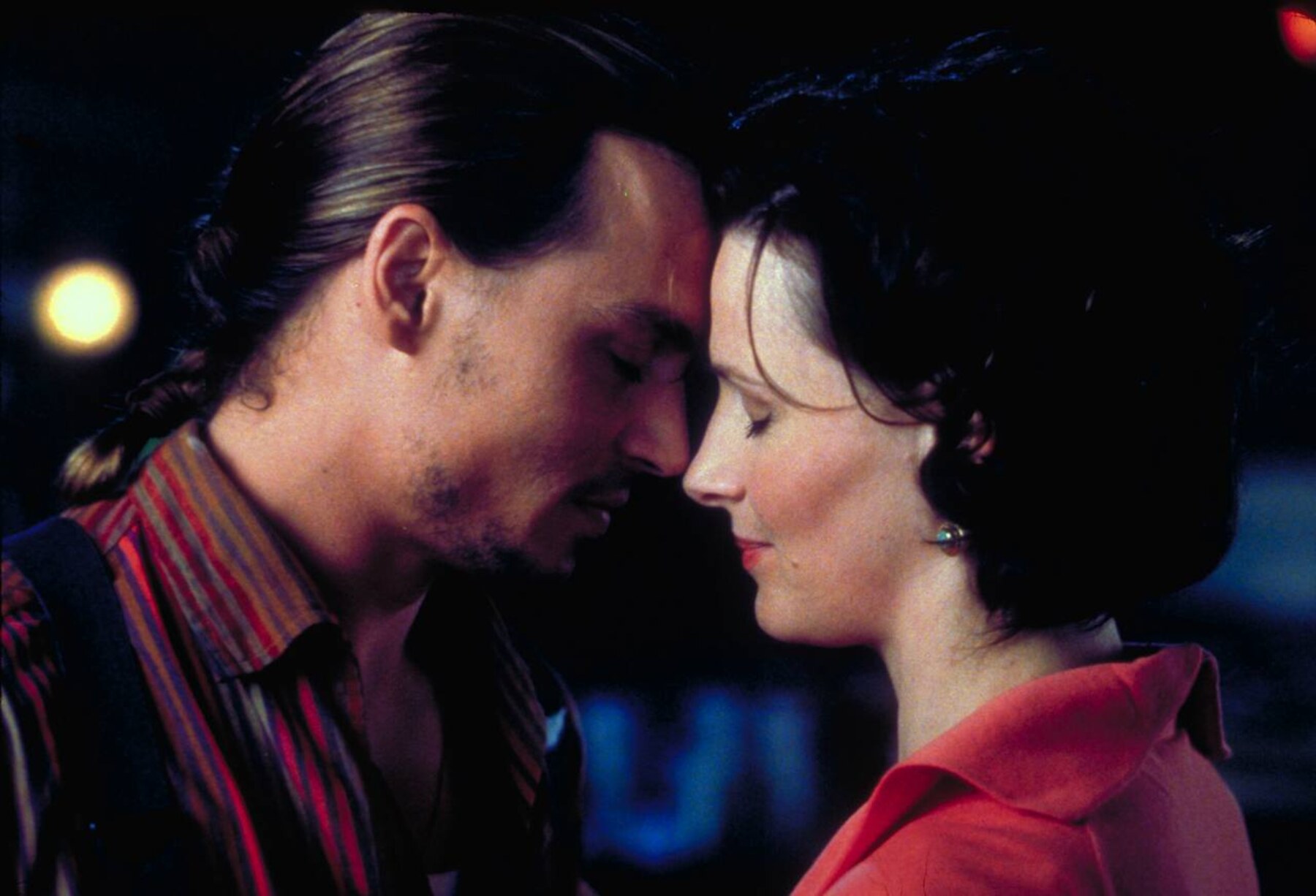
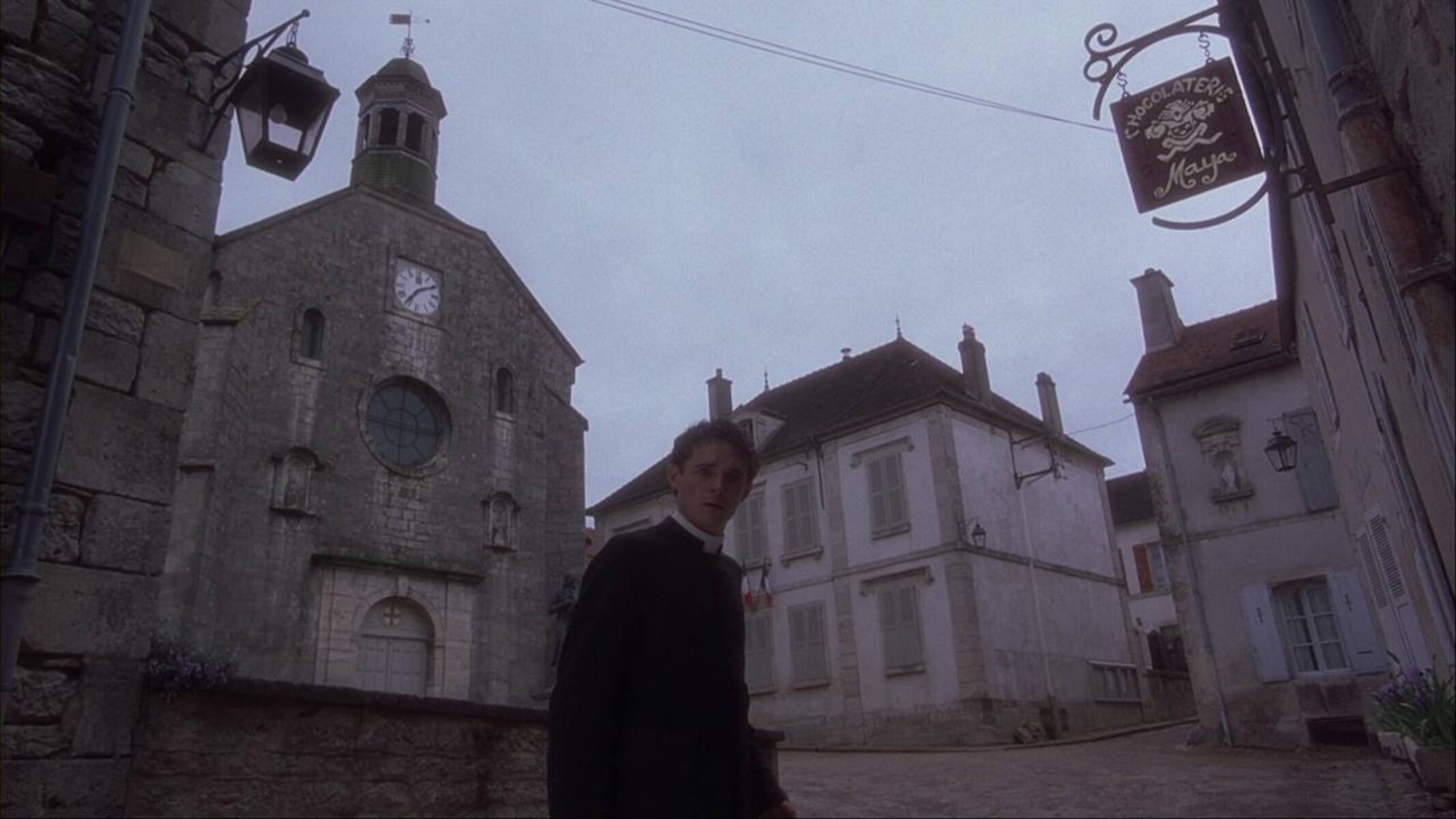
In contemporary cinema, too, chocolate has stopped being merely dessert. It has become a symbolic marker, one that reveals what's happening inside a character. Two landmark films — Chocolat (2000) and Charlie and the Chocolate Factory (2005) — show vividly how the same product can carry very different meanings.
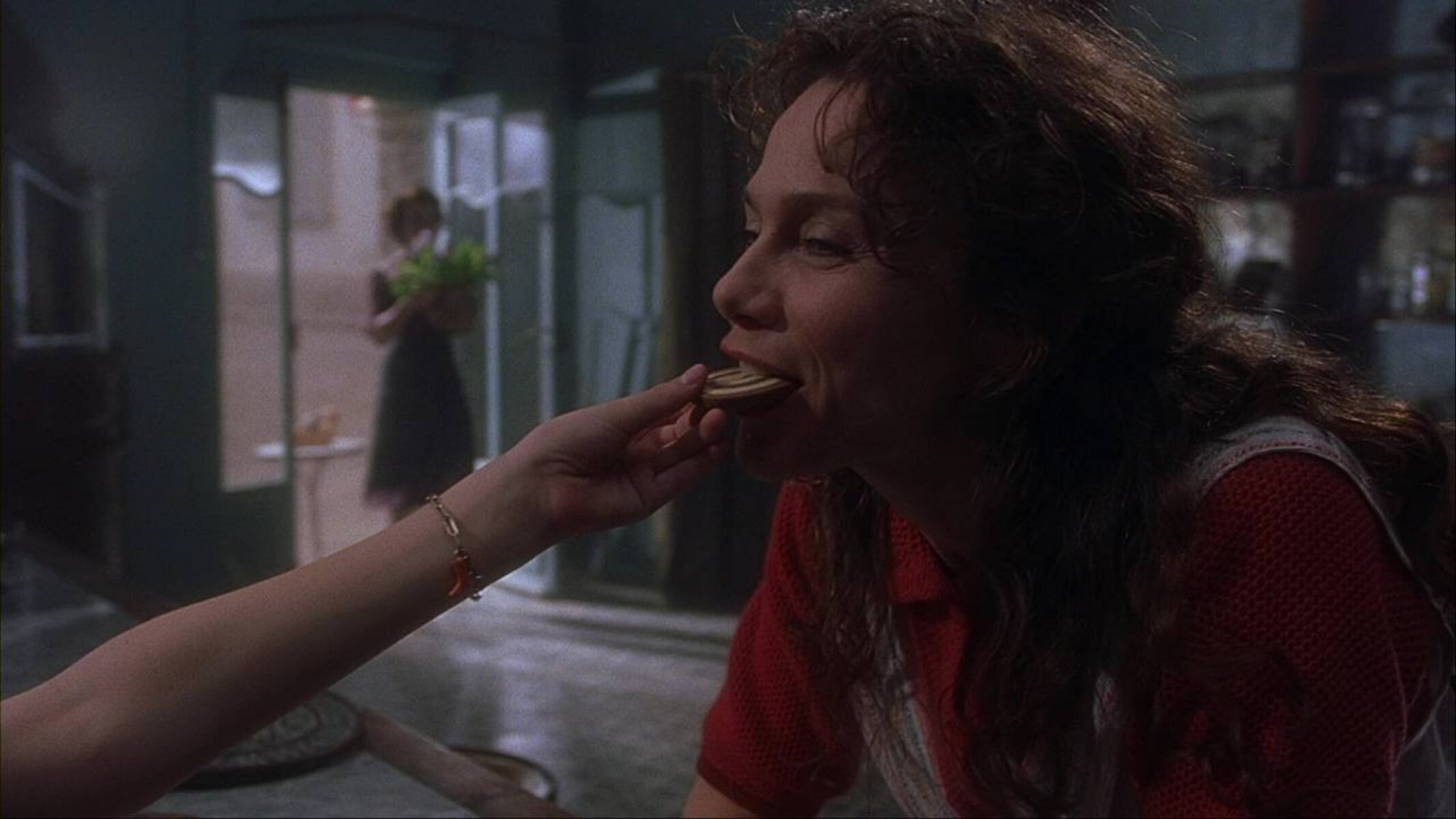
In Chocolat (2000), the treat becomes an engine of liberation. Vianne Rocher's world offers an alternative to the rigid religious politics — and the frozen daily rhythms — of the small French town she moves to. Vianne opens an unusual chocolate shop, offering treats that, strangely enough, help the locals open up their feelings, overcome their fears, and start changing their lives. This provokes the fury of the town's strict mayor, the Comte de Reynaud, who sees in chocolate and pleasure a threat to strict tradition and religiosity. The standoff, with chocolate at its centre, reaches a peak when a camp of Irish travellers arrives in town, and the heroine grows close to one of them. Despite the mayor's efforts to turn the townspeople against the newcomers and the chocolate shop alike, kindness and a little culinary magic dismantle their prejudice. The town's residents begin to stand up for their own freedom, while the mayor, losing his grip, is finally forced to admit defeat. Chocolate here stands for sensuality winning out over cold discipline.
The treat performs an entirely different function in Tim Burton's universe. Here it is a symbol of an absolute dream, measured out in a "golden ticket." Where Lasse Hallström's chocolate is available to anyone bold enough to try it, Burton's is a pass into a better world. Willy Wonka's factory is a metaphor for a better life: for young Charlie, living in poverty, a chocolate bar is his one connection, once a year, to a fairy-tale world. The eccentric confectioner hides five golden tickets inside his chocolate bars. Spoiled, greedy children find four of them; the last falls to the modest, kind-hearted Charlie. Touring the factory, the other children break the rules one by one and suffer the consequences — all except the film's hero. The film teaches that kindness and honesty are always rewarded, while selfishness and greed lead irreversibly to punishment. Burton makes the dream something material — with the aroma of cacao beans and a sweet aftertaste — available to those who deserve it.
Cinema, too, keeps reimagining chocolate's role. Where an earlier era saw it as an attribute of the drawing room, a sign of calm, the present strips the treat of its elitism and loads it with new meaning altogether.
Brown, chocolate's own colour, carried a reputation for ugliness for a very long time. It gained its first wave of popularity in fashion in the 1970s, and today, according to Pantone's analysis, brown is considered fundamental across a wide range of design decisions. In painting, too, its role is to create a feeling of reliability and wholeness, complementing other colours while carrying its own "grounding" effect.
Brown works in near-perfect harmony with a wide spectrum of other colours, lending them its own depth. That makes it an indispensable foundation within a composition, keeping the overall picture smooth and natural and helping it avoid harsh contrast. It doesn't tire the eye — if anything, it lets the eye rest. Some of its shades also recall earth and nature; that natural origin triggers, in many people, a subconscious sense of stability. Handled well, the colour produces a feeling of safety and calm — something felt most clearly of all in painting.
In contemporary branding, brown — particularly its more chocolate-toned shades — has earned the status of "the new black," becoming a strategic choice for luxury brands. Thanks to Louis Vuitton and others, the colour now also reads as a mark of refinement, letting a brand build a confident image. Unlike black, which a broad public often reads as distant or overly formal, brown brings a sense of warmth into branding. That lets luxury-segment brands stay sophisticated while feeling more "human" to us. In identity design, brands reaching for shades of brown are also aiming to underline longevity and quality, since "authenticity," for many, carries the same association. It wins over the hearts of admirers across many forms of art through its sheer depth.
In the end, whether in its refined or its more provocative expressions, chocolate in culture has always been perceived as something more substantial than mere food. Once the reputation of an elite drink, today it has become our indispensable little endorphin ritual before an important exam or another stretch of demanding mental work. But its role isn't only about the biochemistry it triggers — it's chocolate's capacity to become a marker of pause and focus, something many of us have lacked across different eras, this one included. Today, July 11th, marks World Chocolate Day. After this dive into its cultural context, the best way to close out the day is simple: treat yourself to a bar of your favourite chocolate.