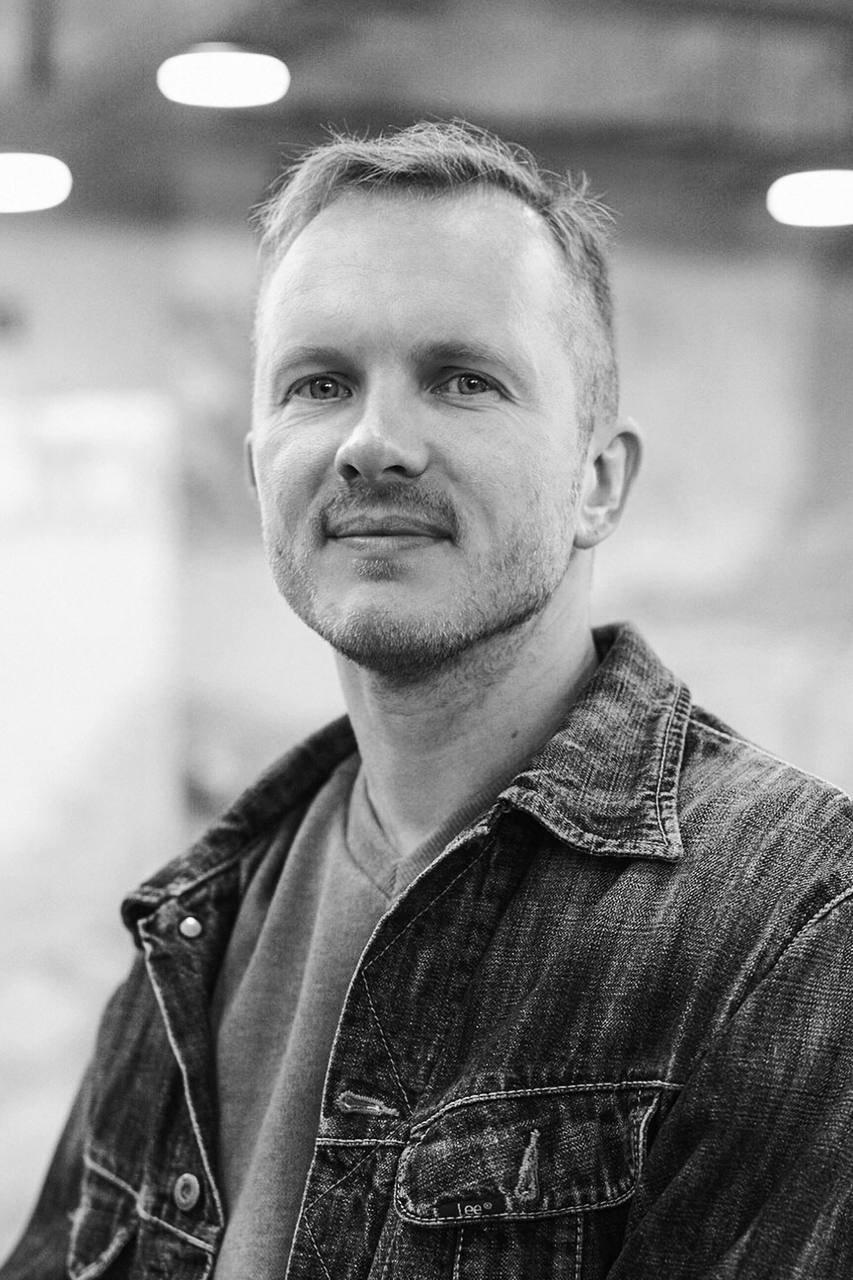
He shot the Kyiv episode of a Netflix series that reached the Emmys, films Ukraine's Sixtiers for Ukrtelefilm, and has now twice sat on the MSIFF jury — this year as its president. Born in Kyiv in 1986, he graduated from Igor Sikorsky Kyiv Polytechnic Institute in audio, video and cinema technology, worked in television at TET, UA TV and NTN, and in 2014 founded the production company 2M-Video. In recent years he has moved almost entirely into documentary film. In 2021 he won the competition to create the Eurovision music video for Go_A; in 2025 Turning Point was an Emmy Awards finalist.
"You can criticise the film industry endlessly, or you can roll up your sleeves and work, work, work."
Maxym, you recently served on the jury of MSIFF. Tell us about the experience — what was it like working with the festival?
It was my second year on the MSIFF jury — my first experience of judging came last year, and I was glad to be invited back. What I value about the festival is its openness: it genuinely brings together filmmakers from very different countries and backgrounds, and the organisers give the jury real freedom to judge the work on its merits.
What is it like to be a juror at a film festival? How does it all work — and is this typical work for you?
It's a lot of watching — carefully, and more than once. You look at each film as a whole: the idea, the direction, the camera work, the editing, the sound. As a director of photography I naturally notice the image first, but a good juror has to set his own profession aside and ask whether the film works for the viewer. For me it isn't routine work, and that's exactly why I take it seriously.
The festival drew filmmakers from dozens of countries in 2026. What can you say about the level of the entries? Which films stood out?
The range was wide — short narrative films, features, documentaries, films made with artificial intelligence, and this year a separate block of screenplays. Twenty-one films reached the final, and the level was genuinely high. Cuerpos by Reiff Gaskell, the festival's winner, stood out for its honesty and its confident visual language.
Were there many submissions from Ukraine? Did any Ukrainian participants make you proud?
Yes, and I was proud of them. The Ukrainian block — House of Street Culture, Monsters, Ama Mortem, The Light, Bogin Lapruchan — showed that our filmmakers can hold their own next to international colleagues. And it mattered that they could present their films in person and talk directly with directors from abroad.
You worked with Netflix on Turning Point: The Cold War and the Bomb, which was partly filmed in Ukraine. What was your role?
In 2024 the series producer, Alexa Poolos, invited me to shoot the ninth and final episode. It was filmed in Ukraine, mostly in Kyiv, and dealt with Russian aggression against Ukraine. Besides filming locations, I shot a number of interviews with political figures in key positions — President Volodymyr Zelensky, then-head of Defence Intelligence Kyrylo Budanov, former President Viktor Yushchenko and others. Netflix used more of my footage than anyone else's for the trailer.
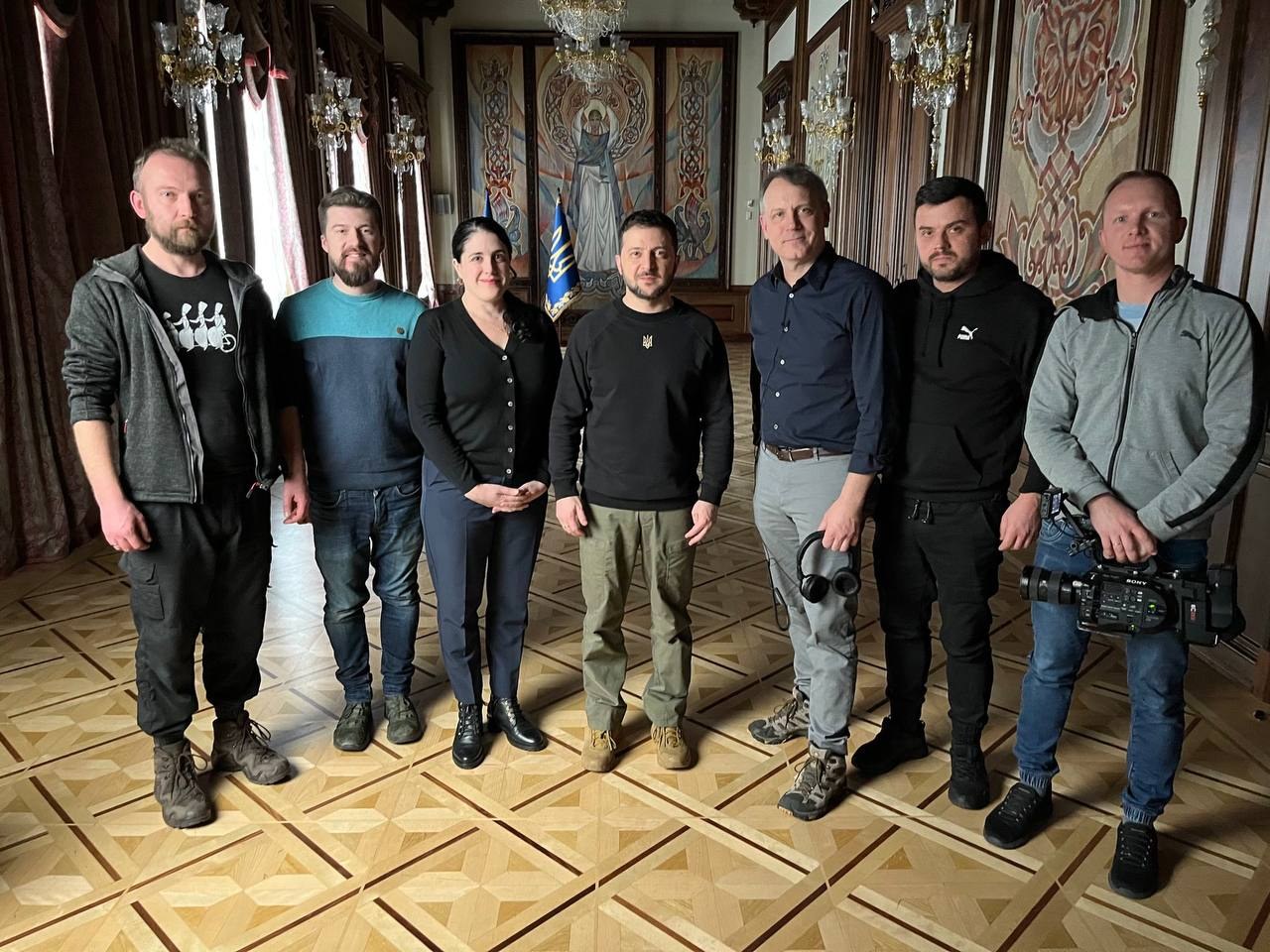
On set with President Volodymyr Zelensky, filming Netflix's Turning Point: The Cold War and the Bomb.
The film was shortlisted for the 2025 Emmy Awards. Did it win?
We were told the film was nominated in the Best Documentary category. The team had high hopes, but unfortunately the award went to another documentary. Weighing our chances, I followed the film's popularity on IMDb: among viewers, our film had the highest rating of all the nominees in the category that year — higher even than the previous year's winner, the documentary about Oppenheimer. An IMDb rating of 8.4 is a solid result.
What do you think of contemporary Ukrainian cinema — its level, its dominant genres, and documentary in particular?
Ukrainian cinema is going through a difficult but very honest period. Documentary has come to the fore — the war has made the need to record, explain and remember urgent. The problems are familiar: funding, and a shortage of experienced professionals. But the motivation has never been stronger.