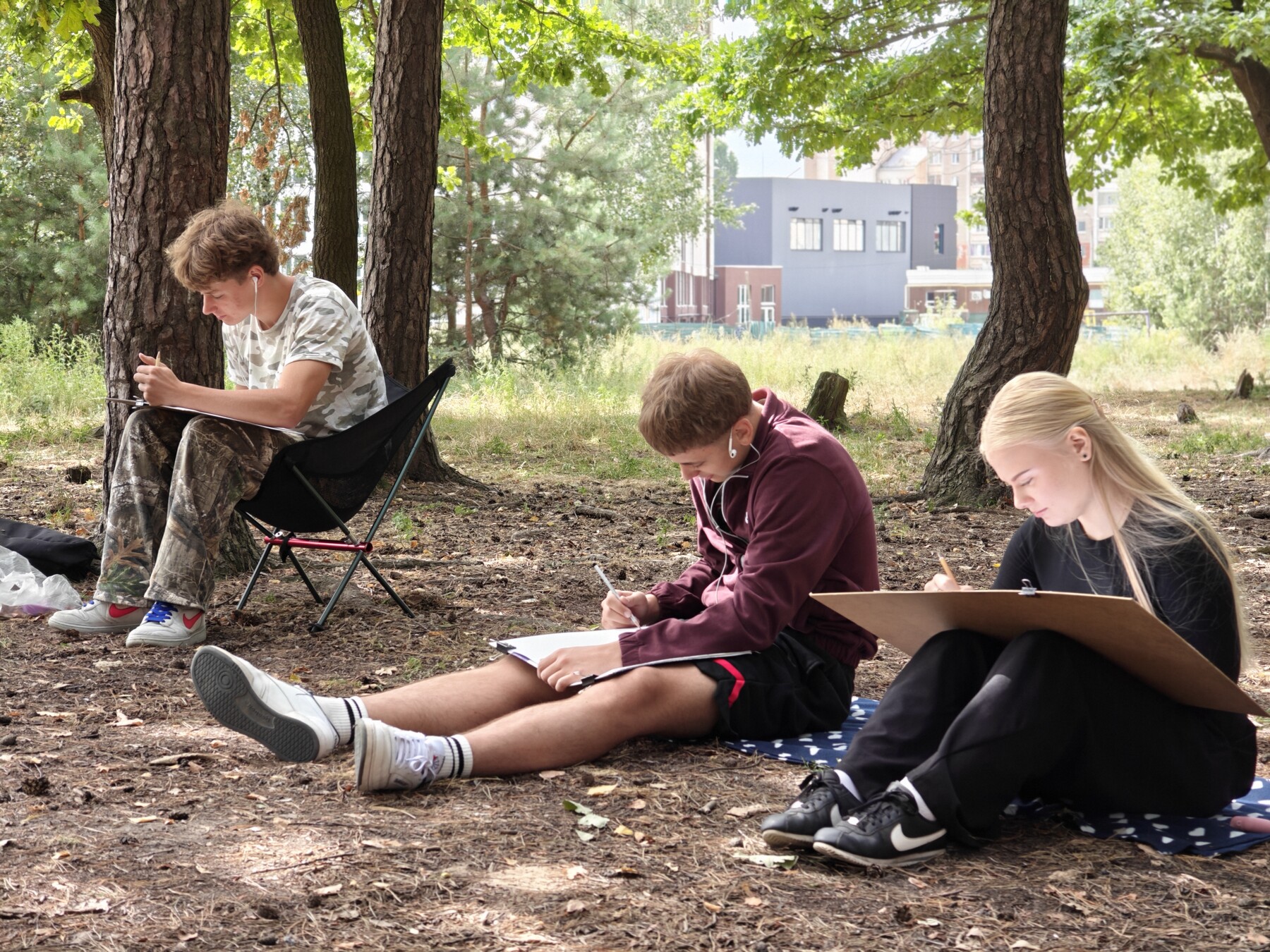
Olga Gavryk founded "Khudozhka," a creative studio for children and adults in Chernihiv, on a conviction she keeps returning to: that drawing isn't a privilege reserved for the talented, but a natural human need — and a skill, like any other, that gets stronger with regular practice.
Olga is the founder of "Khudozhka," a creative studio for children and adults in Chernihiv, and a teacher and practicing artist herself. She has worked with children and adults for ten years, helping them uncover their own creative potential through drawing. In her practice, she combines academic knowledge with a soft, supportive approach that lets every student move at their own pace and without fear of making mistakes. She's convinced that drawing isn't only about technique — it's about a person's inner state, trust in themselves, and the ability to express emotion through creativity. That's why her classes put less emphasis on evaluating the result and more on the process itself: sensation, freedom of self-expression, and imagination.
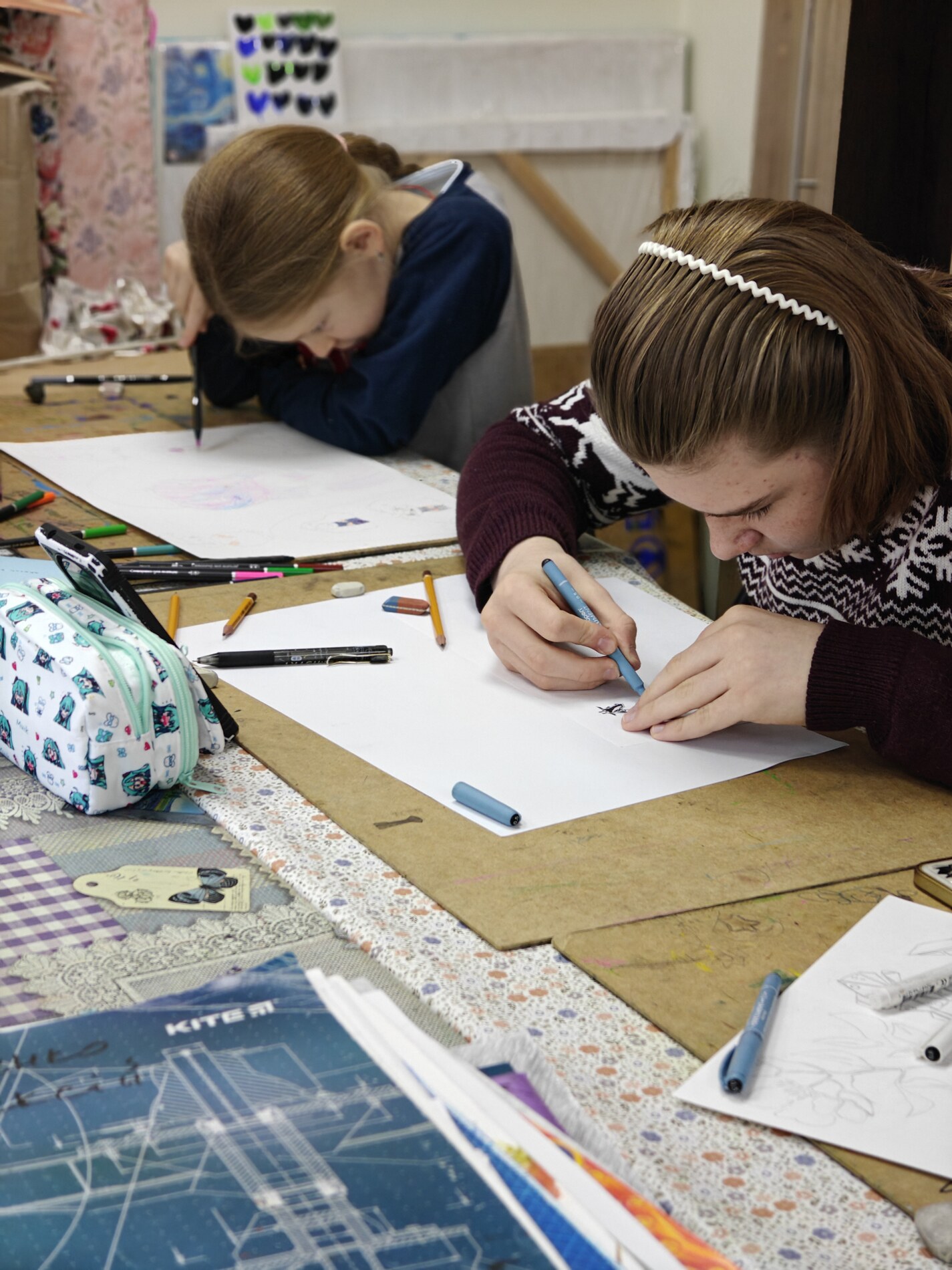
Alongside studio sessions, the studio strongly encourages practicing at home too — because, as she puts it, drawing is a sport, something worth doing every day. She has experience teaching at university level, which lets her explain complex artistic principles clearly and accessibly, and from an early age she plants the idea that this knowledge is something a child can carry into adult life — since today's children are the next generation of adults who will go on creating after us.
Khudozhka is a place where people allow themselves to create, restore their inner resources, and find joy in simple things. Everyone who comes through the studio can feel that drawing is natural, accessible, and genuinely about themselves. Its central task is to dispel the myth that only the talented can draw — because in reality, drawing covers a wide spectrum, and everyone comes to it for their own reasons.
"Drawing isn't about talent. It's about permission. Permission to try. Permission to make mistakes. Permission to be yourself."
That myth is a familiar one from childhood for many people — "don't go outside the lines," "draw it correctly," "that doesn't look right." Phrases like these shape a belief that creativity has to meet a standard, and if it doesn't, it simply "isn't for you." Over the years, that turns into an internal prohibition: don't try, don't make mistakes, don't show yourself. Both adults and children arrive at Khudozhka carrying exactly these attitudes — some ashamed to show their work, some saying "I can't," others simply wanting to try without believing in the result. And nearly all of them travel the same path: from fear to curiosity, from stiffness to freedom, from "what will others think" to "what do I want."
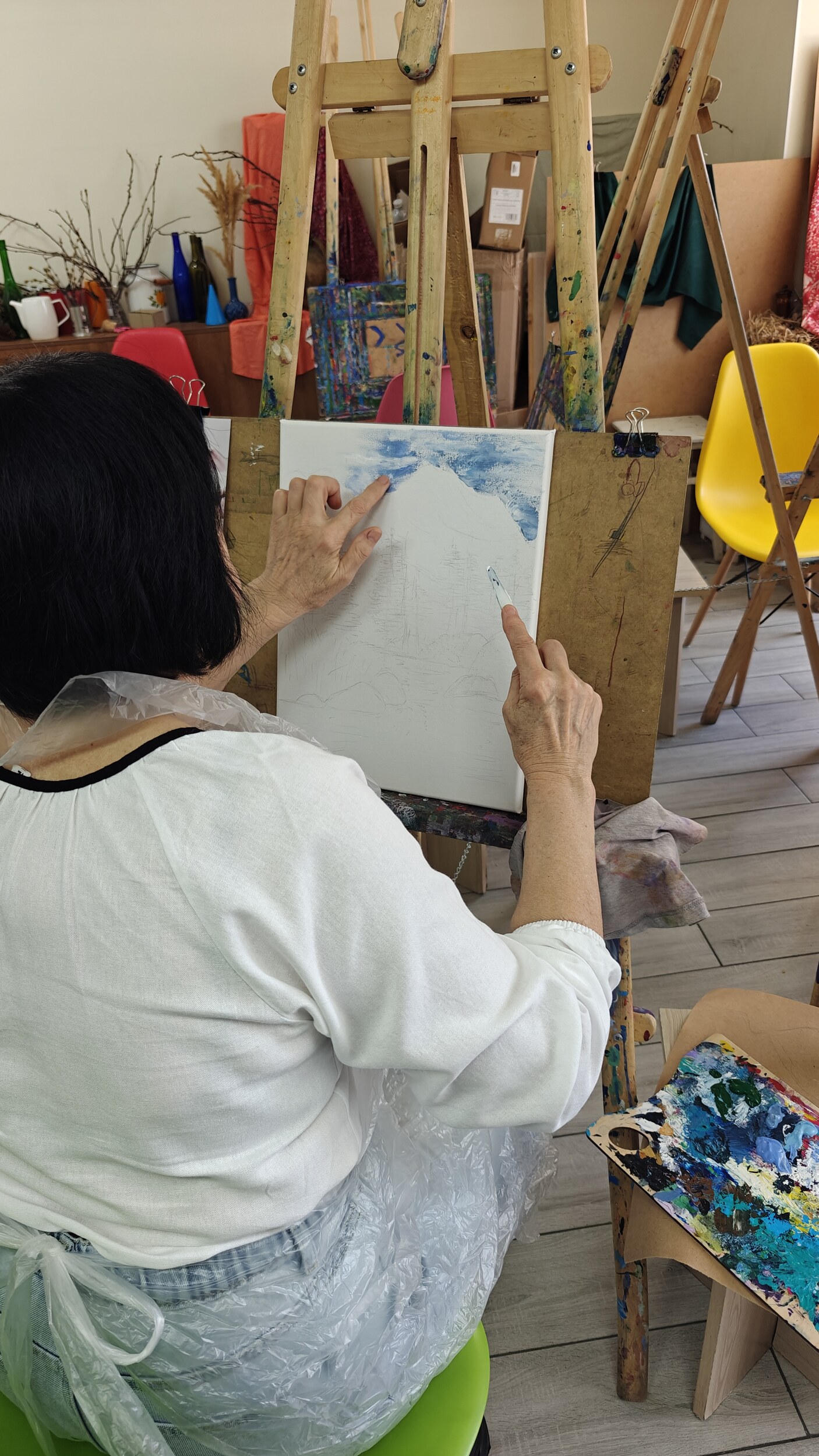
During classes, an academic foundation is combined with a soft, supportive approach — students aren't required to get it "right," but are helped to understand how it works and to find their own way of doing it. Sessions are structured so each person can move at their own pace: some grasp form quickly, others take longer to feel color, but at the center of the process is always the individual student, with their own rhythm, temperament, mood and experience. What matters isn't "how it's supposed to be," but "how it feels right now."
None of this means abandoning academic fundamentals — quite the opposite, they remain the foundation. Perspective, light and shadow, composition and color are all explained in simple, accessible language, sometimes through play, not as complicated theory but as a tool that gives a person something to stand on. Once someone understands how an object is built, or how light behaves, they stop being afraid of getting it "wrong." Particular attention goes to regularity: home assignments are supported and encouraged, since drawing, like sport, produces results through small, consistent steps rather than occasional bursts of inspiration — and there's no pressure in this approach, only an invitation to stay in the process.
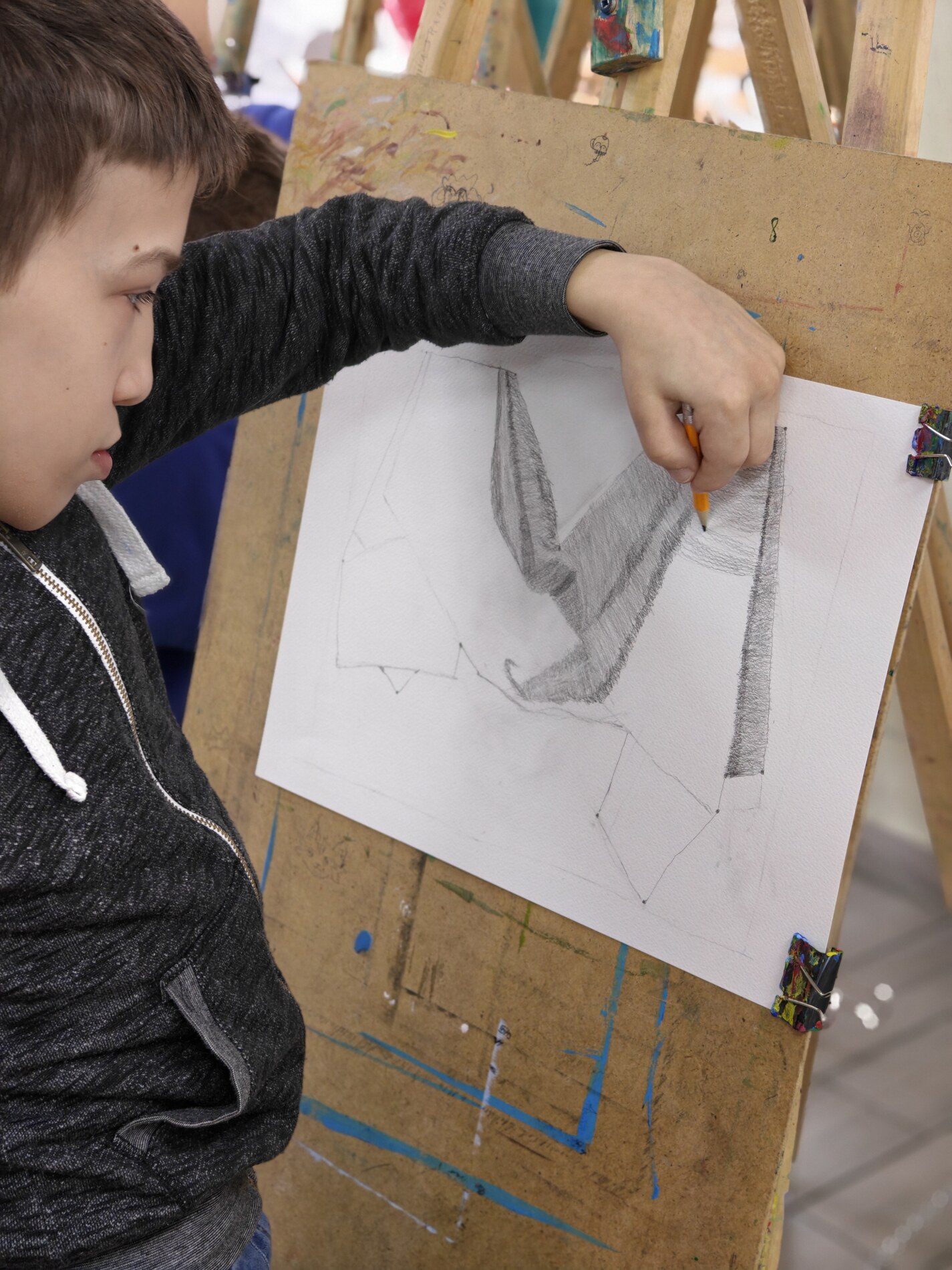
Class formats vary — from regular groups to masterclasses and creative evenings. There's intuitive painting, where the point is to feel rather than analyze; work from observation, which sharpens attention to detail and the ability to really look; and experiments with materials, including painting with wine, where the process itself becomes an act of discovery. Formats like these are often the first time people let go of controlling the outcome — and that becomes a turning point, the moment the question "is it beautiful" gives way to "what am I feeling."
Working with adults holds a particular place at Khudozhka. Many of them have put off creativity "for later" for years, or never considered it part of their lives at all. They arrive after work, tired, their heads full — and gradually learn to slow down. Drawing becomes, for them, not a task but a way of recovering: no grades, no comparisons, no competition, just a process where it's possible to be imperfect, to try, to make mistakes, and keep going anyway. That's what gives a sense of freedom often missing from everyday life. Children in the studio get a different but equally important experience — through drawing they learn to see, analyze, concentrate, and see something through to the end. Most importantly, they don't lose faith in what they're capable of; from an early age, they absorb the idea that a mistake is part of the process, not a reason to stop.
Today, Khudozhka is more than a studio — it's a community of people who allow themselves to be in the process. What's born there isn't only paintings, but a new relationship to oneself: softer, more attentive, more honest. Plans ahead include expanding formats, launching online programs, and developing directions for different age groups — but the core idea stays the same: creativity should be accessible.
More on Khudozhka can be found on Instagram @xudozhka_art.