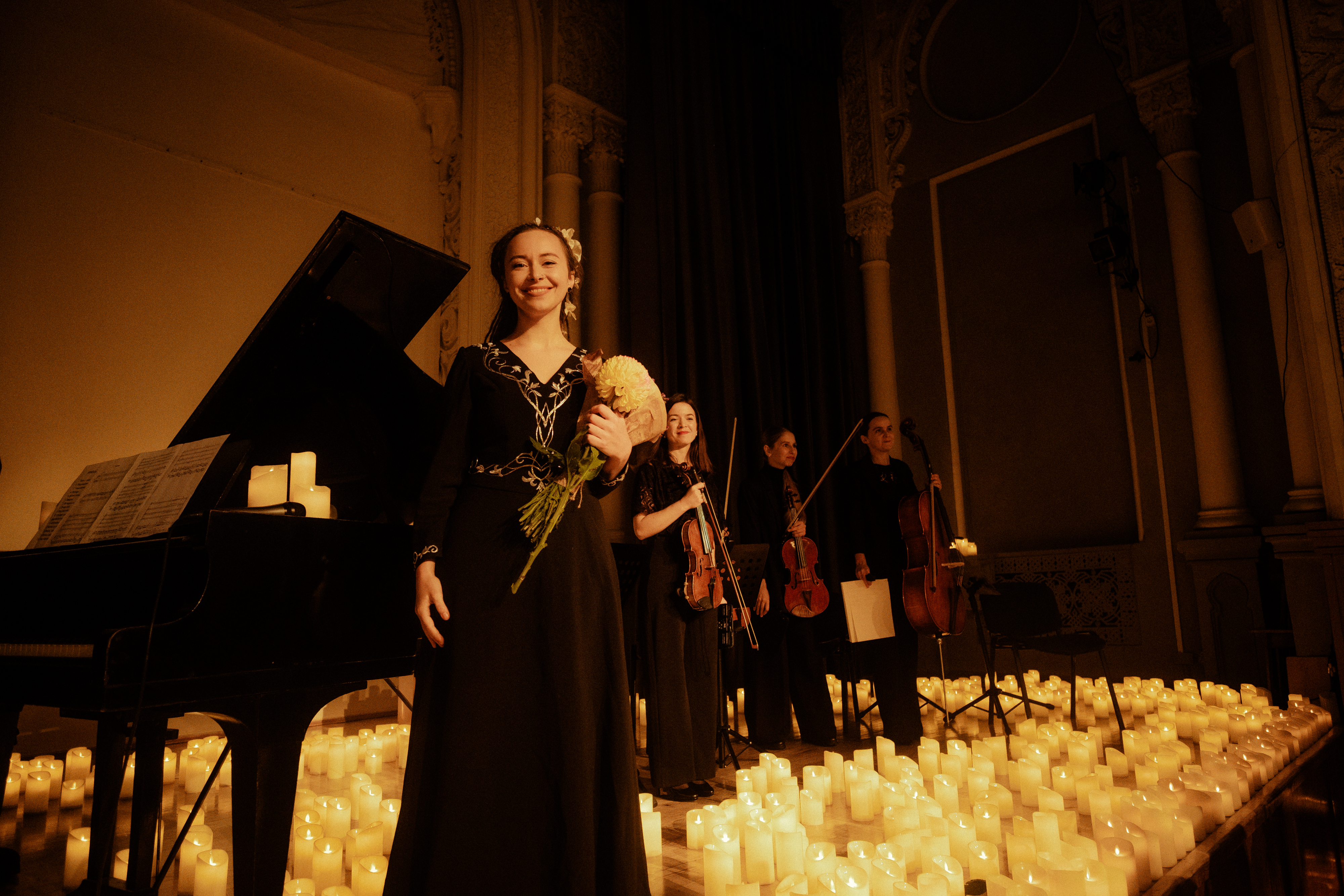
She performed at the Royal Gala Dinner in the United Kingdom. She has given over 70 charity concerts across Europe and America since February 2022. And through all of it, Mariia Yaremak has been working toward one thing: a musical universe built entirely from Ukrainian myth.
Mariia Yaremak is a Ukrainian composer, pianist and arranger whose career moves across film, theatre, orchestras and international stages. Her works have been performed in the United Kingdom, France, the United States, Germany, Austria and Ireland. She is an ambassador of Creative Youth UK, a nominee of the UN Women prize and the Ukrainian Institute's Women in Arts: The Resistance award. She has been studying at the National Film and Television School in the UK since 2023 — one of the leading film schools in the world — and it was there that a central conviction of her work crystallized: that Ukrainian mythology has the same depth, the same strangeness, the same history, and the same cinematic potential as the Norse or Celtic traditions that dominate global fantasy. The "Ukrainian Odyssey" project was developed with the support of the Ukrainian Cultural Foundation.
That conviction became a project. "Ukrainian Odyssey" is a conceptual album of twelve original compositions — epic, cinematic music built from the imagery of mavky, molfars, Perun and the rich symbolic world of Ukrainian folk tradition — the history of Trypillia, Kyivan Rus', the Cossacks, and their mythical creatures. It is not folk music. It is film music that happens to be rooted in Ukrainian soil. The distinction matters to Mariia: she is not trying to preserve or museumify Ukrainian culture. She is trying to make it sound like the future.
"Our mythology has the same power as Norse or Celtic legend. We just haven't told the world yet."
Since the beginning of Russia's full-scale invasion of Ukraine in February 2022, Mariia has co-organized and performed at more than 70 charity concerts across Britain, France, the United States, Germany, Austria and Ireland. The concerts were not only fundraising events — they were acts of cultural presence, moments where Ukrainian music occupied European stages and European halls filled with candlelight and the sounds of something people had not heard before.
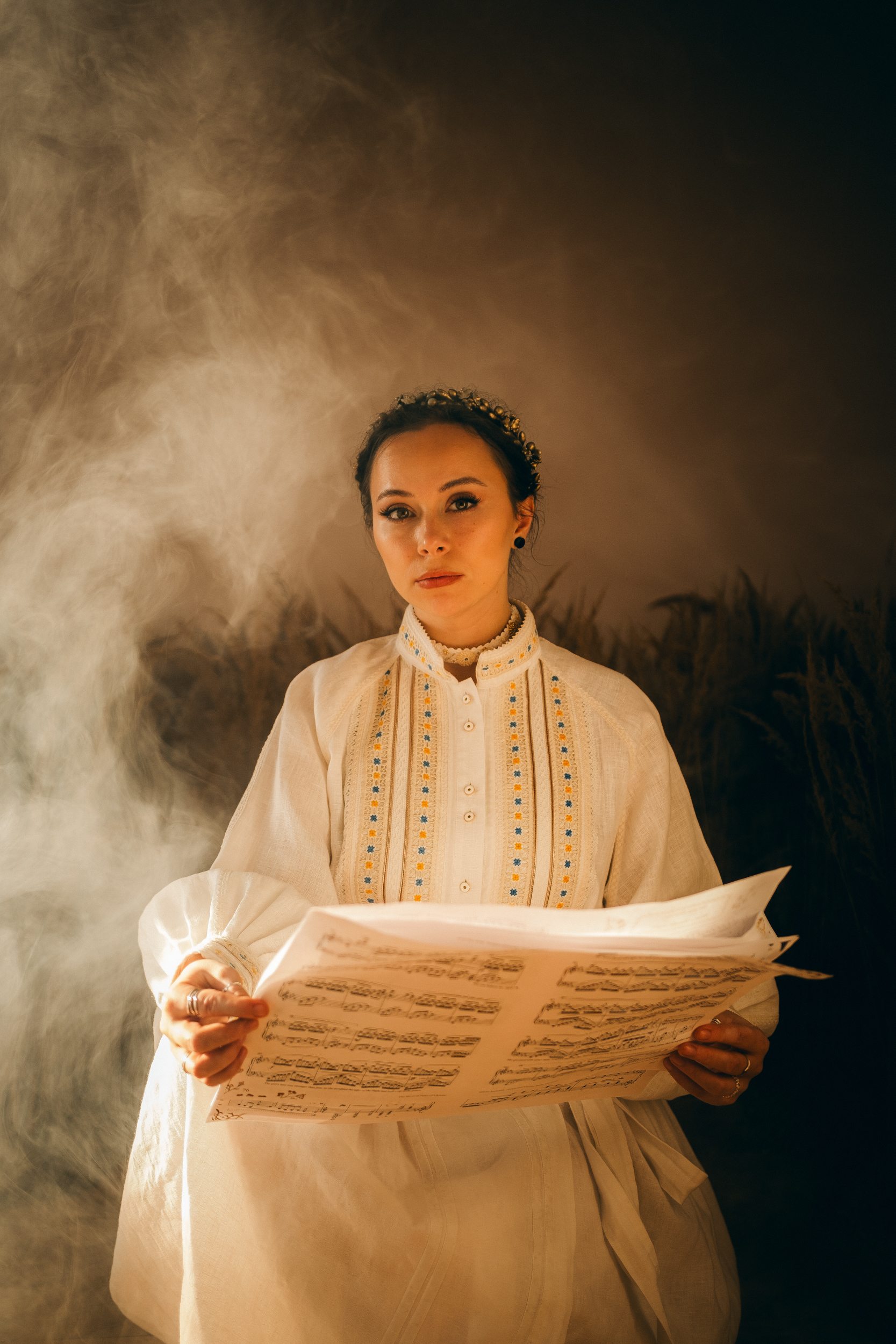
In her performances, Mariia combines original compositions with her own arrangements of ancient Ukrainian melodies — songs that are sometimes centuries old, translated into a musical language that can be understood without explanation by someone who has never heard a word of Ukrainian. That translation — of something deep and local into something universal — is the core of what she does.
The long-term vision for "Ukrainian Odyssey" extends beyond the album itself. Mariia wants to build a sustainable model for Ukrainian cinematic music — a template that can be developed, scaled and used by the Ukrainian film and television industry as it grows. She wants Ukrainian sound to occupy the same space in global cinema that Icelandic sound currently does, or Irish sound, or the particular atmosphere of Scandinavian film scores. A presence that is identifiable, that carries a place and a history and a way of understanding the world.
For Mariia, this is also an act of cultural diplomacy — perhaps the most direct one she knows. Music crosses borders that other forms of communication cannot. It does not require translation in the conventional sense. And when it carries within it the specific imagery of mavky rising from the water, or the thunder of Perun, or the grief of a folk melody that has survived centuries of suppression — it carries Ukraine with it into every room where it is played.