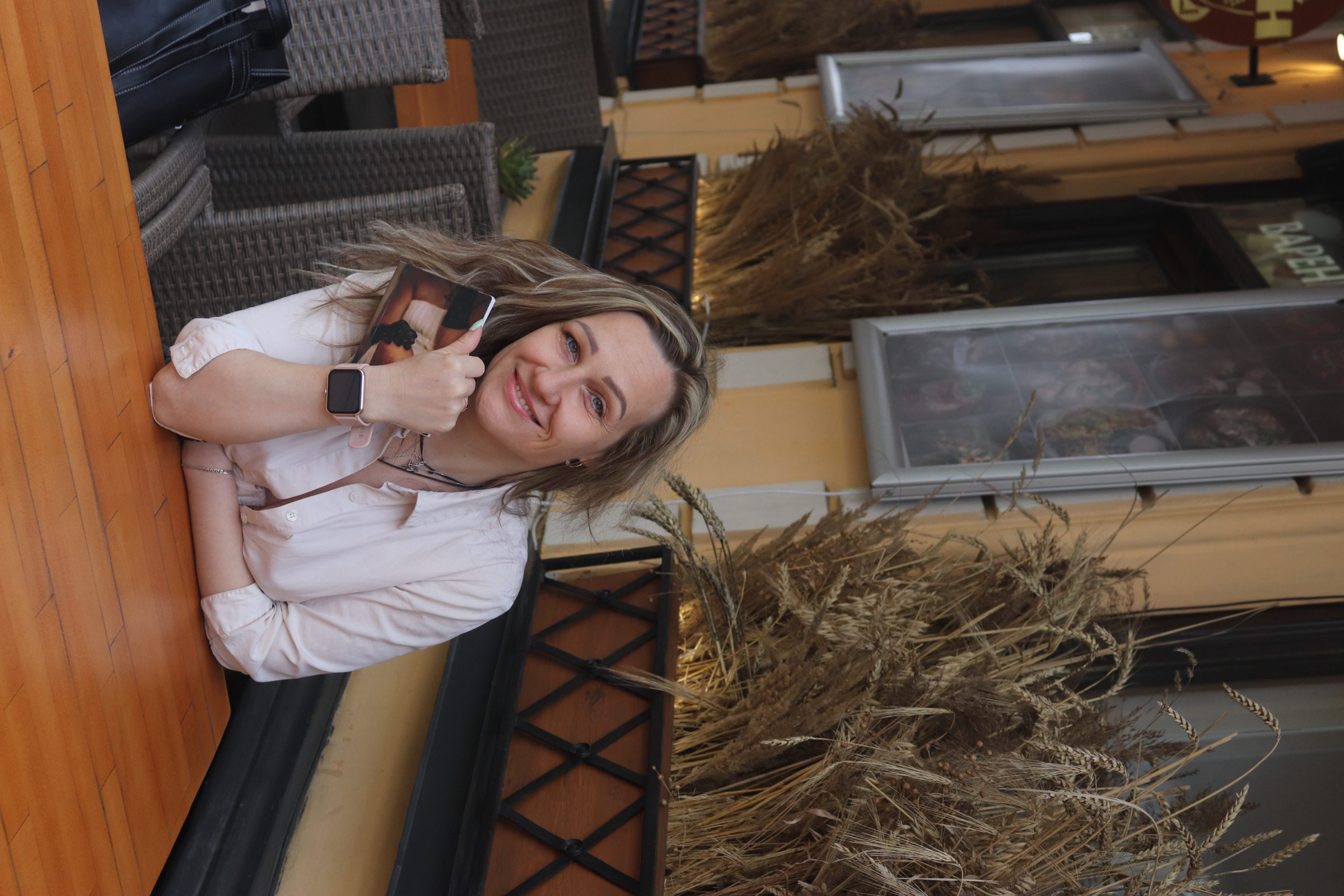
She was a mathematician. Then a wife in a difficult marriage. Then a woman alone in a new city with three children and no certainty. Julia Kovalska started writing when she had nothing else — and within a year had published more than 500 books for other people to tell their own stories.
Julia Kovalska is a Ukrainian writer, poet and entrepreneur, currently based in Lviv. Her path to literature runs through mathematics, a painful divorce, forced displacement from Kharkiv, and the particular clarity that comes when the life you had is no longer available and you have to build a different one.
The turning point came, as she describes it, when she realized that the way she was measuring her own life had something in common with a cardiogram — a line that goes up and down, but one where the most alarming state is not the low points but the flat line. The absence of movement. Stasis. She decided she would rather have the difficult rhythm than the silence.
"I started writing when I had nothing left to lose. That turned out to be exactly the right moment."
She wrote through the divorce. She wrote through the move from Kharkiv to Lviv after the full-scale invasion of Ukraine began in 2022. She wrote while raising three children in a city that was not yet home. And she kept writing until the work accumulated into something she could no longer contain on her own — which is when she founded Byuro Dobryh Istoriy, the Bureau of Good Stories.
The Bureau is a publishing initiative with a specific and personal mission: to help women find their voices and write their own books. In the year since its founding, Julia and her collaborators have produced more than 500 books — collections of stories written by women who had something to say but had not yet found the form, the permission, or the encouragement to say it. The books are small and intimate. They are not bestsellers. They are something more necessary than that.
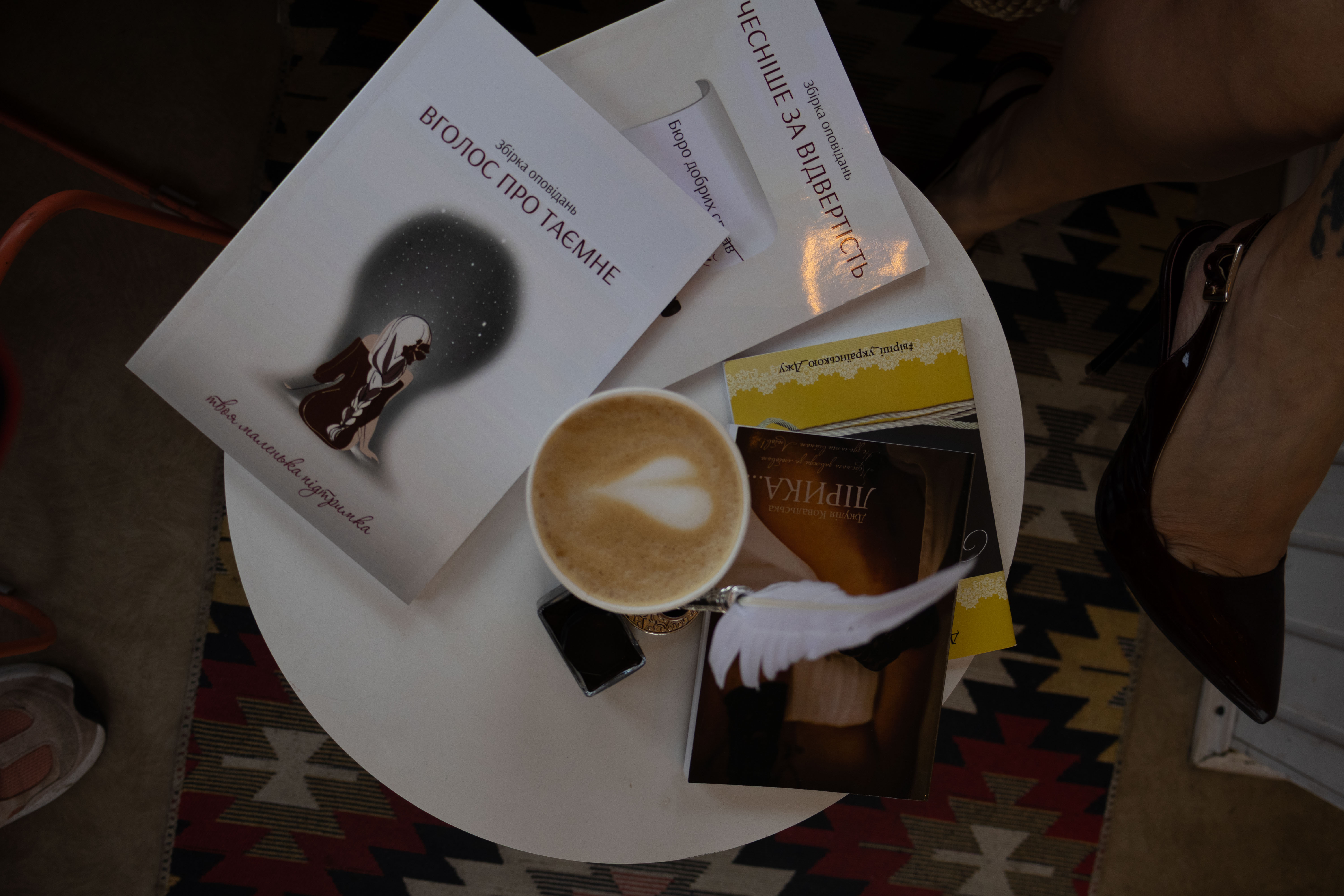
Julia's own writing moves across forms. She has published poetry — among her collections is "Liryka," a book of verse — and prose, including collections of short stories that carry titles which feel like small confessions: "Vholos Pro Tayemne" (Speaking of the Secret), "Chesniishe Za Vidvertist" (More Honest Than Candour). The titles suggest a writer who is interested in the gap between what is said and what is meant — and in what happens when you close that gap.
What drives Julia is not the idea of literature as monument or career. It is the idea of literature as a practice — something you do every day, in the middle of everything else, because it is the only way to remain honest with yourself. The Bureau of Good Stories is an extension of that belief: that writing is not a talent reserved for the exceptional, but a capacity that exists in everyone who has lived a life worth examining.
She is open to collaboration, partnership, and new projects. Her work can be found through the Bureau of Good Stories and on her own social media, where she shares both her writing and the process behind it with a growing community of readers and writers across Ukraine.