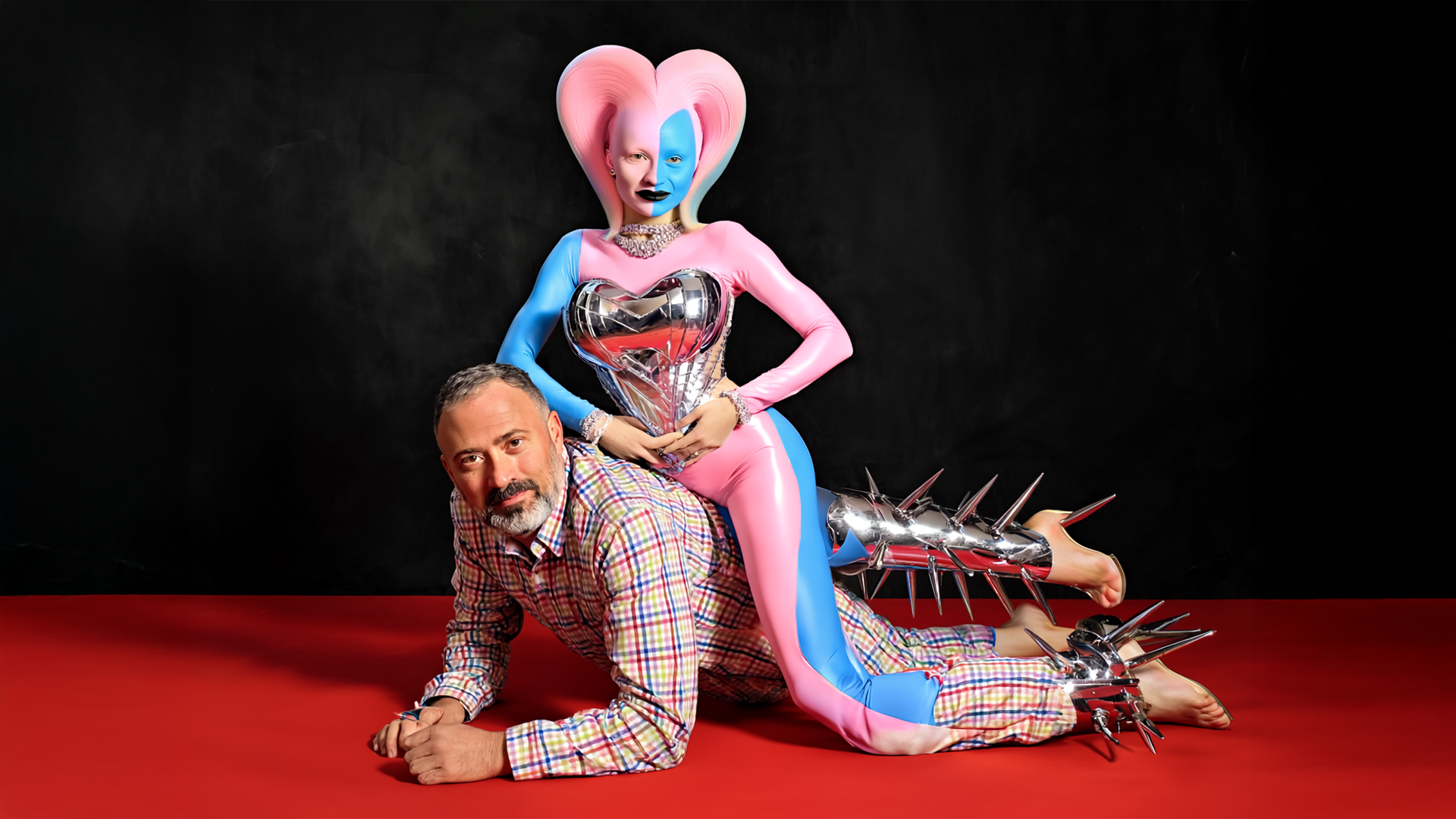
Jason Gottlieb is a designer, artist and educator based in Baltimore, Maryland. His first film — a drag operetta against fascism — uses AI as a creative collaborator to explore identity, liberation and the politics of strangeness.
Tell us about your background.
My name is Jason Gottlieb. I'm a designer and artist based in Baltimore, Maryland. I'm actually quite new to the cinematic world; my background is in graphic design and fine art, specifically painting. I currently teach in the graphic design department at MICA, where I cover various subjects, including motion graphics. I've always loved film, and motion graphics served as a natural segue. When I discovered AI, I saw it as a unique opportunity to tell a story — and that's where the journey began.
Tell us about your first film.
My first film is part of a larger project titled Love with Pain. It's a "drag operetta" against fascism. Given the rise of authoritarian forces globally, I wanted to find ways to counteract that darkness. Through AI, I explored a drag persona, which proved surprisingly liberating. The specific music video I submitted is called Shame, a parody of the indie game Stardew Valley. I was fascinated by the irony of people using man-made technology to simulate a yearning for nature.
"To fight authoritarianism, we must stay true to the parts of our identity that don't fit the mold — the queer, the strange, and the gritty."
The sunflower symbolism feels especially powerful given Ukraine.
It's interesting how history reveals itself. I recently discovered I am half Ukrainian Ashkenazi Jew — my family didn't speak much about our heritage. Discovering the significance of the sunflower in Ukraine felt like a subconscious pull. In Stardew Valley you can cultivate fields of sunflowers, and I learned how vital they are to Ukrainian history and ecology. As a gay man, I also appreciated the game's inclusion of gay marriage, but I wondered about those still excluded. The film uses this game narrative to explore those frontiers of liberation.
What was the most challenging part?
Learning to "negotiate" with a computer. AI is a black box — chaotic and unpredictable. Something as simple as a character drinking water can be incredibly difficult to render. It is a collaboration with a non-human entity. Many think AI art is effortless, but it was actually a grueling process to get every shot exactly right.
What do you hope audiences take from the film?
I hope they find humor and lightness. We live in dark times, and laughter is rejuvenating. But I also hope they feel the seriousness of the message. To fight authoritarianism, we must stay true to the parts of our identity that don't fit the "mold" — the queer, the strange, and the gritty.
Watch the interview
Open on YouTube ↗