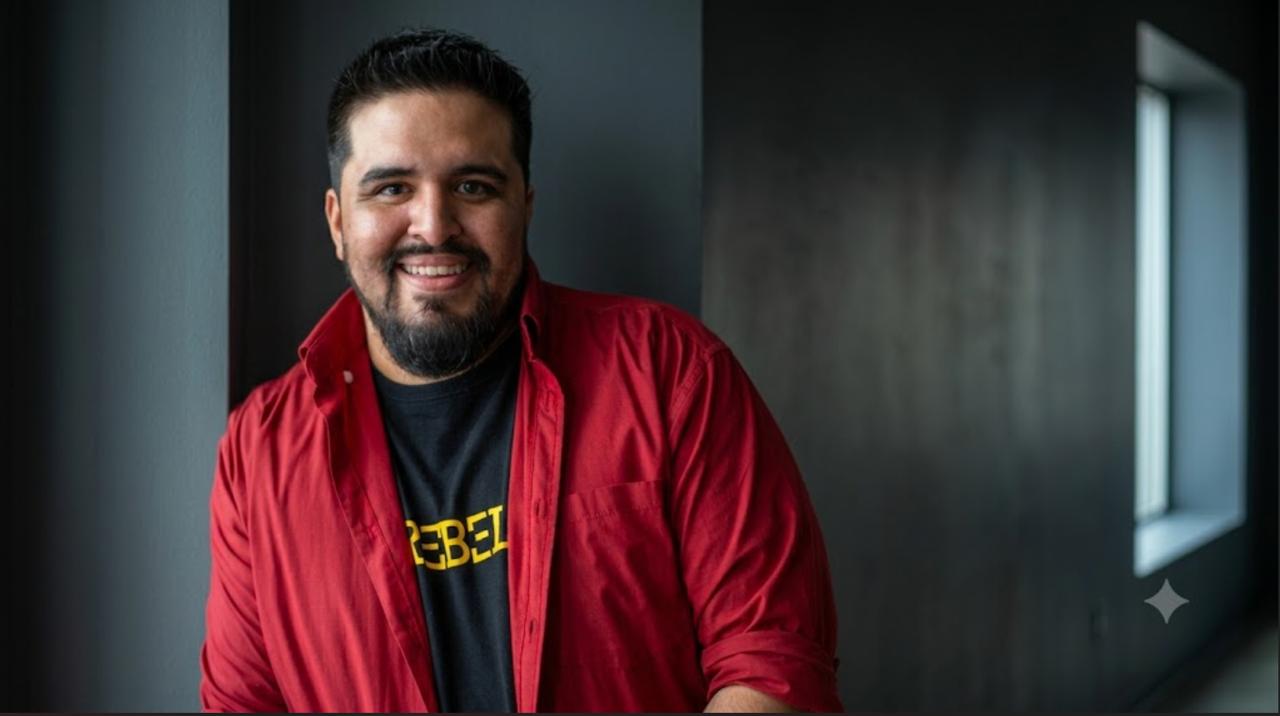
Born in Texas, raised across Egypt and South Africa, Emilio Joe built his career in stand-up comedy before pivoting to documentary filmmaking. His debut film Stolen Ground — made almost entirely on his phone — sparked a national conversation about land rights and the fragility of community spaces.
Tell us about your journey to filmmaking.
I come from a comedy background. I was born in Texas, spent part of my life in Egypt, and later moved to South Africa, where I started my career in stand-up. That eventually led me into content creation and filmmaking. I currently run a YouTube show covering current affairs in South Africa and globally — and that platform is actually what pushed me toward documentary filmmaking.
What drew you to this particular story?
The documentary is called Stolen Ground: The Tigerberg Raceway Story. It started as a short video idea for my YouTube channel. I came across posts showing how land was being occupied almost overnight, and I couldn't understand how that was even possible. But the more I researched, the bigger the story became. I focused on the Tigerberg Raceway — it used to be an important place for the community, but during COVID lockdown, it was illegally occupied. That's when I realized there was something much deeper going on.
"Just start. No waiting for the perfect moment. Use what you have, learn along the way, and trust the process."
What was the hardest part?
Editing, without a doubt. Filming and research felt more natural, but shaping the story in post-production was incredibly challenging. There was so much footage, and I didn't want the film to drag. Figuring out what to keep and what to cut was the hardest part. The film also evolved a lot — I had a rough structure, but every new piece of information could shift the direction. Discovering the PIE Act, for example, completely changed the focus of the film.
What kind of response did the film receive?
It started conversations, which was the goal. People — including politicians and media — began talking more about the PIE Act. That was really important for me. And personally, the biggest realization was that I'm actually capable of doing this. There were moments when I questioned everything, particularly during editing. But finishing the film taught me to trust myself more.
What would you say to aspiring filmmakers?
Just start. No waiting for the "perfect moment." You don't need perfect conditions. Use what you have, learn along the way, and trust the process. That's how this film happened.
Watch the interview
Open on YouTube ↗